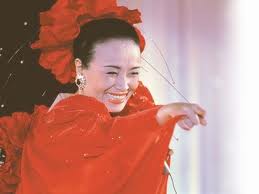
Wednesday, 17 October 2012

How to do things with words


There’s a nice piece on ‘re-reading Austen’from Alison Croggon in Overland 208 I finally managed to read on the bus earlier in the week. You should read it, too (there’s no need for you to catch a bus, though); it’s written with Croggon’s customary wit and perceptive intelligence, and offers a novelist’s and technician’s view of Austen. We’re both ‘habitual re-readers,’ but I think writers read differently to the rest of us, and re-read differently in illuminating ways.

Croggon’s main point – that the etymological links between ‘propriety’, ‘proper’ and ‘property’ are key to the whole anti-Romantic comedy and vocation of the novels – is well made and important. I still, from time to time, have students approach me imagining that I’m going to be in sympathy with claims that Austen is outdated, narrow, conservative and generally outside the realms of what the politically-engaged critic ought to find interesting. How untrue! She is, as Croggon points out, quite specific in her range of social representational ambitions, to be sure, but these are pursued with a ruthless and clear eye. A passing encounter with the vast literature exploring all of Austen’s many philosophical and critical dimensions should give any of those with pretensions to be her detractors cause to blush. I’ve lost track of the many hours of stimulation Jocelyn Harris’ Jane Austen’s Art of Memory and Marilyn Butler’s Jane Austen and the War of Ideas have given me, to name only two classic texts.

But is romance lost along the way? (I mean romance here in the sense the Beach Boys use it in ‘Barbara Ann’, and am not going to worry over literary history). It’s a symptom of the anxiety behind all those He Man poses of the best figures of literary criticism’s high moment last century (men reading books!) that they felt the need so insistently to separate a ‘proper’ reading of Austen from the dangerous frippery of the Janeites. From Edmund Wilson to Wayne Booth the rhetorical line continues, although, since feminism, one of the great pleasures of academic life has been the collective realization this separation needn’t be so: it’s among the Janeites that some of the best critical responses have been produced, Sedgwick’s ‘Jane Austen and theMasturbating Girl’ most famously.

Croggon’s too canny and deft a reader to fall Wilson’s way, but I wonder at some of her divisions. For her Austen is ‘a most determined anti-Romantic, in every sense’, a writer who, re-packaged in the marketing materials of ‘chick-lit,’ produces novels quite other than the ‘escapist models of romantic passion’ they’re promoted as exemplifying.

You get her point, of course: the best comedy in the novels comes from their clear-sighted sending-up of the absurdities and limitations of the very social world they serve, as comedies, to sustain and affirm. All of the satire here – and it's a very prudent satire, and all the more biting for that –is hard to fit into ‘romantic’ modes of appreciation without under-reading.


This, for example, one of the funniest moments in Pride and Prejudice, was suppressed in Joe Wright’s atrocious film version:

Persuaded as Miss Bingley was that Darcy admired Elizabeth, this was not the best method of recommending herself; but angry people are not always wise; and in seeing him at last look somewhat nettled, she had all the success she expected. He was resolutely silent however; and, from a determination of making him speak she continued,

``I remember, when we first knew her in Hertfordshire, how amazed we all were to find that she was a reputed beauty; and I particularly recollect your saying one night, after they had been dining at Netherfield, "She a beauty! -- I should as soon call her mother a wit." But afterwards she seemed to improve on you, and I believe you thought her rather pretty at one time.''

``Yes,'' replied Darcy, who could contain himself no longer, ``but that was only when I first knew her, for it is many months since I have considered her as one of the handsomest women of my acquaintance.''

He then went away, and Miss Bingley was left to all the satisfaction of having forced him to say what gave no one any pain but herself.

Take that, socially unbalanced society figures!

Finance, property, standing, and prudent social and emotional investment are all, in Austen, inseperable from the texts’ erotic or emotional economy, something Auden sends up nicely:

You could not shock her more than she shocks me;
Besides her Joyce seems innocent as grass.
It makes me uncomfortable to see
An English spinster  of the middle class
Describe the amorous effects of ‘brass’, 
Reveal so frankly and with such sobriety
The economic basis of society.

That doesn’t exhaust the matter, however; for all that her ‘romance is all about prudent behaviour, and at its root this prudence is fiscal and pragmatic’ (Croggon’s phrase) it is also romance itself, and this is why I think she can’t be denied her place in the marketing of chick-lit.

This scene – from chapter 9 of volume 1 of Persuasion – makes the counter-case perfectly. It’s one of the most sexually daring passages in the whole of English literature, and certainly one of the most emotionally affecting. Anne Elliott, oppressed by her ghastly family and relations and out of all hope of again finding love with Captain Wentworth, is caught in an upsetting and familiar situation:

“Walter,” said she, “get down this moment. You are extremely troublesome. I am very angry with you.”

“Walter,” cried Charles Hayter, “why do you not do as you are bid? Do you not hear your aunt speak? Come to me, Walter, come to cousin Charles.”

But not a bit did Walter stir.

In another moment, however, she found herself in a state of being released from him; some one was taking him from her, though he had bent down her head so much, that his little sturdy hands were unfastened from around her neck, and he was resolutely borne away, before she knew Captain Wentworth had done it.

Her sensations on that discovery made her perfectly speechless. She could not even thank him. She could only hang over little Charles, with most disordered feelings. His kindness in stepping forward to her relief – the manner – the silence in which it had passed – the little particulars of circumstance – with the conviction soon forced on her by the noise he was studiously making with the child, that he meant to avoid hearing her thanks, and rather sought to testify that her conversation was the last of his wants, produced such a confusion of varying, but very painful agitation, as she could not recover from, till enabled by the entrance of Mary and the Miss Musgroves to make over her little patient to their cares, and leave the room. She could not stay.


What makes this so moving? The brilliance of the writing is important, obviously; Austen’s use of free indirect discourse here to have her narrator track the disorder and arousal of her character’s feelings in their very inarticulate confusion matches almost anything the Modernists achieved. James Wood takes this passage to exemplify free indirect discourse in his discussion through How Fiction Works; it’s an example of what D.A. Miller calls Austen’s ‘secret of style,’ the anonymous No One of style itself her exercising mastery.

But what, again, of the romance? It’s such a complex passage: of course it’s not because ‘her conversation was the last of his wants’ (he still loves her, how can she not see this?) but what makes her so affected? There’s a powerful physical sense to the scene, for sure, the excitement of contact with a beloved, but distant, person, but what stands out for me is the way the jumbled pattern of the last paragraph’s free indirect discourse allows the narrator to fuse our sense of both his moral decency – or understated kindness – with a sense of the intense pleasure and distraction physical contact brings.


The choice, in other words, and here Persuasion is for me the triumph of all the novels, is not between realism and ‘witty fantasy’ or ‘escapist passion’ but through them both. What Austen offers – scandalously, and in ways which make her our contemporary – is a model, in prose, of the education of desire, of its transformation and elevation. The ways in which the meanings of ‘sense’ and ‘sensibility’ have changed between her time and ours make this clearer still: it’s by the process of sense that sensibility (hers, and ours) takes on its positive charge. The path to clear-headedness is to be through a fantasy suitably ordered and directed (Wickham and all those cads as tests and delusion!): Wentworth's ability to recognise the need for, and to carry out, a simple but vital domestic intervention, and to act with kindness, are what make him so attractive.

Austen, for me then, remains the best realist at the very moments she working with fantasy.

Sources

D.A. Miller’s Jane Austen, or, the Secret of Style came out from Princeton in 2005. The Auden lines are from ‘Letter to Lord Byron.’


Wednesday, 15 August 2012

He'll be the last to know


This is a picture of cultural history, and of course also its absence and disregarded status. Until a year or so ago this site on Dundas Street was where you could walk past Hone Tuwhare’s old cottage, a surprisingly wee building to have housed such a well-built and handsomely imposing man. The street’s changed, as rental property colonises the last of the family homes and cheaper houses, and something more profitable is bound to appear in this space soon. Still, it came as a shock, the last time I was home, to be forced into seeing an absence.

I saw Tuwhare read twice, once in a bravura performance he gave in my school library, closing with a reading of ‘Monologue’ rendered so brilliantly – and uncannily Glasgwegian – it's stuck with me ever since. (I like working near a door). The other time, a more chaotic and disruptive moment in the Public Library (Marx and Engels! What about the workers?) sticks for other reasons.

Still, there was once a house here, and a link with a living sense of cultural energy. It’ll be replaced, soon enough, with something profitable for a landlord.

He sensed a sea of receding
faces picked himself up
and promptly emptied his guts
on the footpath fervently calling
for his bleeding mate Christ
who was nowhere to be seen

Later wearing a stiff mask
of indifference
he pissed himself in the bus

The two places where I learnt properly to drink – by which I mean of course to drink properly, to drink improperly, to get caught up in all the waste and rudeness and embarrassment and selfish shame of alcohol and its delusions – don’t exist anymore either. I can’t pretend a nostalgia for either the Albert Arms or the Corner Bar of the Captain Cook, except perhaps in the memory of once meeting Tuwhare there, with Bill Dean in 1999, and hearing him recite Burns. What’s replaced them – a ghastly, globalized ‘Irishness’ where the Albert once was, and yet more barn space in an ever-more dystopian Cook – point at trends in the city more widely.

Much is made of the ‘student experience’ and the life of the Scarfie, and many of the same people who enjoy blether of that kind – some, indeed, professionally – are ready in other seasons to offer a whole variety of moralisms and lessons over riots, vomit, and anti-social behavior.

I never remember the sun in Northeast Valley


Exploring the attractions and damage of alcohol – which may well be a way of describing the same experience, or the same desire – Dunedin has produced two works of real literary genius, and both of them offer  lessons beyond the aesthetic.

Carl Shuker’s The Lazy Boys (2006) is one of the best novels of the 2000s. Written before, The Method Actors, his occult psychogeography of Tokyo, but published in the period after this ‘first’ novel’s success, it’s only in comparison to this companion that The Lazy Boys can seem underdeveloped or hesitant. I read it in one horrified sitting the Christmas of 2006, recognizing – with something close to jealousy or disgust, and an agitated excitement – that a whole realm our own social world had been drawn in to representation. Shuker’s characters are the flotsam of undergraduate life, the people whose ‘talent is being wasted’ and the whole array of pubs and liquor stores that open up as young people discover the serious routines and patterns proper drinking demands:

We are sitting, me and Matt, at the foot of the mossy concrete wall that encloses the Leith River. The river is just a trickle at this time of year. We’re drinking milk bottle beer and watching the river glittering blackly in the light from the streetlights on Dundas. Matt has puked already, felt sick and stuck his fingers down his thoart, and he’s telling me this thing bitterly, thinking for some reason that I’m angry at Nick.


I’ve read that, when it was published in the United States, The Lazy Boys was received as something like a frat-novel, a boys-gone-wild tale of wild times and exhuberance. Having grown up in Dunedin, the possibility of an assessment like this staggers me: Shuker’s produced a novel of our particular South Island miseries, alienations, hangovers, dislocations. There are parties aplenty, to be sure, but that seems hardly the point.

Parties, nowadays, lead to moralising talk about riots and anti-social behaviour. The generation before your own, unlike today’s graceless versions, was always the last to know how properly to enjoy themselves, as is the case everywhere else I suspect, but the couch-burning students I passed on my junk mail runs in the early 1990s (all of whom must now be in their 40s or near enough) don’t seem, in memory, all that different from today’s self-destructive youth.

I grew up close to the university, and have no affection for the misogyny, macho affectation and swagger that passes for student culture on Castle Street, but something about the sustained outrage aimed at rioters down the years sticks in my throat. Having marketed the Scarfie experience for years, there’s a stench of hypocrisy about in the rush to condemn its obscene supplement.


Those loudest in their condemnation of anti-social behaviour have, in their own ways, profited from it handsomely indeed. The rotting flats and cold, damp rooms of North Dunedin fund many a Wanaka holiday house, and – as non-debates over a Capital Gains Tax suggest – plenty of middle class households in Maori Hill and Roslyn rely on sub-standard properties to help fund their own children’s educations. Landlords are a noticeable absence in most talk when there's a search for problems, to say nothing of soutions. The pressurised world of consumerist alcoholic binges and litter-cluttered streets is part of a particular ‘community’ economy of exploitation and exchange, not its negation.

The Slipway, Dunedin’s other work of genius, takes this part of the social world as its target: GrahamBilling’s novel – a late modernist masterpiece scandalously neglected and underread – covers a few significant days in the life of Geoffrey Targett, heir to a nearly bankrupt shipping line, and regular at the Golden Age Hotel. Student drunks reveal themselves by having to stagger home, but plenty of well-off boozers can collapse on the kitchen floor at the end of an otherwise ‘elegant’ dinner party. Billing takes this world, and estranges it through a Leith Valley -  Port Chalmers – Taieri River axis. His mastery of free indirect discourse – and with it his ability to capture something of the anxious tightening the drinker needs to keep panic at bay – can only really be conveyed through a proper, long quote:

“I know the sort of things you people go in for, all that brass and chrome hardware. Anybody would think you could fool the fish. Well, you can’t. There’s nothing like the natural way.” McTaggart’s voice was already hoarse from such a speech and to Geoffrey it was no surprise. McTaggart had sucked lemon, honey, and blackcurrant throat pastilles as long as he could remember. He felt rather less shy. It was probably true that drinking was also an act of self-medication. One was being one’s own doctor. But if McTaggart ate a tin of medicated honey, lemon, and black-currant pastilles every day that really was an extreme case of self-medication and a whole lot worse than taking a few brandies for a cold or a few gins to settle one’s stomach.

Geoffrey took out his cheque book. Here was the acid test: the quality of the writing. There were distressing times when he would forget to write the last ‘t’ on the end of his signature, creating a serious dilemma. The bank might refuse to accept the cheque, yet he could not alter the signature because that would look even more like a forgery. It was not the kind of error in filling in a cheque form that one could initial. Paying by cheque was a kind of sport.

“Targett,” said McTaggart. “You must be Geoffrey. Was that the name, or was it George or Giles?” He was such an expansive man all of a sudden, leaning back at his counter with his thumbs – yes, his thumbs – actually stuck in his waistcoat pockets, his white hair standing on end, and his small eyes glistening like the currants in the painting on his tin of pastilles. He cleared his throat with an enormous noise. “I’ve got something for you.”

“Geoffrey,” said Geoffrey.

“Of course it is. Your father used to bring you in here when you wore short pants.”

McTaggart’s posture was avuncular, Geoffrey thought in a panic.

Free indirect discourse allows Billing the chance to position us side-on to Geoffrey, inhabiting his consciousness while at the same time never quite being sure which are his delusions. His refuge, a great comfort for drunks, is a intensely felt interior pomposity and victimhood:

Why was one always forced to establish relationships with mean people who went around complaining about life? They seemed to attack only because they wanted to be associated with people more important and less dignified than themselves. If they pleaded or said something pleasant their superiors would never give them a second look. One didn’t mean superiors exactly in the same class or social sense but in some intangible sense of competence, intellectual or managerial or social. There was a status bastion at which the little people flung themselves like a dwarfish army besieging a dragon in his mountain, turning their inadequacy to advantage by holding it out like a battering ram. At the same time they held up banners showing bleeding hearts to catch the sympathy of the spectators.


Jesus what a jerk

The university has in recent years developed a set of responses to try and prevent the Castle Street riots recurring – a ban on alcohol advertising and sponsorhsip at University functions, for instance – that seem hard to quarrel with. At the same time, though, all discussions of the city's social problems seem to swerve from the essential fact: the riots, much like their weekly echoes in the street fights, vomiting and shouting all the way from Bath Street to the Gardens, are symptoms, and symptoms of a social disorder no amount of regulation will resolve.


Next year it will be twenty year since Dunedin’s police riots, when officers attacked students protesting outside the Registry building against fee rises. That event sparked a furious round of student protest and activism in response, and contributed to the effervesent and exhuberant political culture which revived across New Zealand campuses in the early 1990s.


The contrast with Castle Street couldn’t be clearer, as atomised and disoriented drinkers threw themselves against a state force with little sense of their purpose or its consequences. The point of the comparison, though, isn’t to claim nostalgia for the past but to insist on this shift as evidence of the huge cultural cost involved in that struggle’s loss. As the International Socialists insisted at the time of these latest riots – to some obloquy and scorn – the riots were an expression of the ‘student culture’ Dunedin’s landlords, pub owners and businessmen had created, not its abberation.

They represent, in other words, a sign of the desperation and alienation produced by the very anti-social, individualist logic of an aggressive consumerist, user-pays neoliberalism, precisely what the victims of 1993’s police riot were fighting against. They’re a cost, in one sense, and, in another, part of the balance sheet.


A rush and a push and the land that we stand on is ours

That cost already has its own cultural tribute, one located, ironically enough, almost opposite the erasure of Tuwhare’s home. Tuwhare’s drunks are remembered in poems alongside Communists, protesters and artists, a social Dunedin of mass movements, dissident culture and oppositional, engaged political attitudes.


Strangeways, the flat at the centre of Shuker’s Lazy Boys, isn’t mythologised as with the house in Scarfies. It is, instead, the narrative centre of the representation of a kind of conformist excess, as storyworld and ‘real life’ details collide and clash:

As I’m doing this some of them start shouting ‘meat, meat, meat’ and it’s because Marc Ellis from Gardies has arrived. He’s smiling and someone passes him a jug and I notice all the girls on the couches are looking over at him.

I pick up the half-full jug from the bar and drink a lot of it. All of them are standing side by side and they’ve all got their arms folded or their hands on their hips and they’re all mostly really big. One of them has RUNT written on his forehead. I’m leaning back on the long white counter and trying to look casual but it’s covered in beer and empty bottles and the water soaks through the back of my shirt quickly so I stand up again, take bigger and bigger drinks from my jug. A Maori guy come out a door into the kitchen and inside there’s the mirror of a bathroom and he’s got long hair and he’s wearing an Otago rugby jersey with a huge collar and when he turns around to shut the door BLACK BASTARD in big white letters is written on his back above the number 14. Over by the window is one of the girls from the taxi, the one in the pink Holiday Tee sweatshirt and tan moleskins, and she’s talking to a dark-haired girl who looks like she’s maybe sixteen and she’s wearing dark blue moleskins and a beige sweatshirt with Country Road written on it in pitch letters and they’re sharing a cigarette and laughing about something they know together.

That’s cultural history, too, and heritage, however much we might want to disavow its familiarity.


***

SOLITARY DRINKER

Standing in the same old place
He thought ‘I know that silly face.’
And there beneath the spirits shelf
The mirror showed his silly self.

He saw himself with some surprise
A sorry sod with headlamp eyes
AFORE YE GO the slogan read,
But he stayed on and stared ahead.

‘I cannot stand this blasted place,
I cannot stand my blasted face.’

The public bar was through the hall:
It had no mirrors on the wall.


Sources

The line ‘I never remember the sun, in Northeast Valley’ is from Janet Frame’s ‘Dunedin Poem,’ in her The Pocket Mirror. Carl Shuker’s The Lazy Boys (Penguin), pp. 97, 214. There are lots of copies of The Slipway (London: Quartet, 1974) in second hand bookshops around the country; I’ve quoted from pp. 47, 74. The final poem is Denis Glover’s, from his Since Then (1957). Hovering behind all this is Conrad Bollinger’s Grog’s Own Country (1959); he taught in the English Department at VUW before his untimely death, and seems more and more a source of inspiration.


Friday, 29 June 2012

Anthems for Nowhere (II)


I still love Misora Hibari, and always will, but I’m not sure I can keep putting her to such easy discursive work as I have until now. A few years ago here I tried to position her songs as ‘anthems for nowhere’, songs for the stateless, music from Japan’s unacknowledged (and well-night un-acknowledgeable) Zainichi community. There’s so much packed in to that reading – and such comforting assurance that personal taste and political commitment align – that I’m loathe to let it go.


But Sayonara Amerika, Sayonara Japan, Michael K Bourdaghs’ fabulous, beautifully written and spritely new book, a 'geopolitical prehistory of J-Pop', forces me to do just this. I first heard of Misora’s Zainichi status from friends in Korean groups in Tokyo and, when reputable English-language sources repeated their claims, felt comfortable repeating the affiliation as fact. Bourdagh felt that way once too, but, in the process of researching his book, he’s become more circumspect. Misora was public and open about all sorts of other damaging aspects of her life – drinking, gang connections, pain in love, disappointment following the river of life – so why should she have been reticent about any Korean heritage? The sources Bourdagh follows – and his footnotes show he’s a diligent and serious scholar – all lead him to false ends, further rumours, unspecified memories.


All of this, for the cultural historian, isn’t such a problem, though; Bourdagh is as interested in why certain rumours persist as he is in their truth and provenance. Part of the great pleasure of his book is the way it marries the academic and the popular: as ‘area studies’ in Cold War-era US universities successfully translated the Japan of the English-language imaginary from barbarian threat to beautiful ally, so too local Japanese popular cultural practices worked to exclude the recent past (Japan’s colonial project) in order to construct an American-Japanese cultural relationship at the expense of messier politico-cultural remnants.


The concealed past of Asianness in Japanese pop reemerged in other ways too. Like a return of the repressed, it flickered in and out of view like a ghost or a shadow, a kind of monstrous apparition. 

Misora, like Godzilla and Rikidozan (Bourdagh here follows Yoshikuni Igarashi), helps produce ‘the unnameable,’ little remnants of Korean and Chinese cultural contact the ideological ‘truth’ of post-war that 日本人論- the untranslatable, the unique, the de-historicised – wishes so earnestly to deny. Personal ancestry doesn’t matter here so much as musical context: enka, in its appeal to ideals of unique Japanese national essences always contains within itself echoes of the kind of cross-cultural work that went in to producing its possibility.


Bourdagh’s target isn’t so much the ‘real’ Misora, then – whether Zainichi or ‘real’ Japanese – but what she means:


No other person so fully embodies the entirety of post-war Japanese song. And while many previous critics have sought in Hibari the archetypes of a national essence, I am more interested in exploring what her putative Japaneseness tells us about the geopolitical imagination of popular music during this period – about the pleasures that the Cold War opened up for Japanese music lovers, as well as those that it closed off.


One of those pleasures was Misora’s transformation from symptom of U.S. cultural and political dominance (she built her career as a canny imitator of an older boogy-woogy star) into what Bourdagh calls ‘a powerful icon of musical decolonization.’


Enka can’t emerge properly, Bouradgh suggests, until the world it claims to represent is safely distanced. Nostalgia never can be what it used to be – as an increasingly urbanized audience settles in to the consumer society of the long boom, then Misora and others can perfect their laments for rural Japan, traditional simplicity, and country ways. Always, and at each stage of her career, at the very pioneering edge of recording technology, Misora used that space to construct fantasies of the past.


Fantasies of the past. It’s at this point that my own readings become more awkward. I recognise some of that nostalgia in my own listening habits; enka became ‘hearable’ for me only once I’d left Tokyo, and only once I became able to place it as the location of another, desirable, Japan-based life, one I’m coming to realize won’t ever be mine, and would cease to be desirable as soon as it became possible. Enka's themes of loss and longing capture that so well it's hard to imagine them without some 'other time' as projection and referent.


Fantasy projections, there, for sure, but pleasures too.  These are still my anthems from nowhere, not least because of the rumours that sustain them. Zainichi remains the un-named country in Asia – its Utopia, in the spirit of Wilde's map – and Misora’s re-inventions might as well grant her citizenship there.


Sources


Michael K Bourdaghs Sayonara Amerika, Sayonara Nippon (New York: Columbia University Press, 2012) really is a fabulous book. Buy it if you can, or see if your library can order it in. The other chapters – on Sakamoto Kyu, jazz, rockabilly, folk, and more, are each as illuminating as the other. 

ShareThis