Friday, 29 June 2012

Anthems for Nowhere (II)


I still love Misora Hibari, and always will, but I’m not sure I can keep putting her to such easy discursive work as I have until now. A few years ago here I tried to position her songs as ‘anthems for nowhere’, songs for the stateless, music from Japan’s unacknowledged (and well-night un-acknowledgeable) Zainichi community. There’s so much packed in to that reading – and such comforting assurance that personal taste and political commitment align – that I’m loathe to let it go.


But Sayonara Amerika, Sayonara Japan, Michael K Bourdaghs’ fabulous, beautifully written and spritely new book, a 'geopolitical prehistory of J-Pop', forces me to do just this. I first heard of Misora’s Zainichi status from friends in Korean groups in Tokyo and, when reputable English-language sources repeated their claims, felt comfortable repeating the affiliation as fact. Bourdagh felt that way once too, but, in the process of researching his book, he’s become more circumspect. Misora was public and open about all sorts of other damaging aspects of her life – drinking, gang connections, pain in love, disappointment following the river of life – so why should she have been reticent about any Korean heritage? The sources Bourdagh follows – and his footnotes show he’s a diligent and serious scholar – all lead him to false ends, further rumours, unspecified memories.


All of this, for the cultural historian, isn’t such a problem, though; Bourdagh is as interested in why certain rumours persist as he is in their truth and provenance. Part of the great pleasure of his book is the way it marries the academic and the popular: as ‘area studies’ in Cold War-era US universities successfully translated the Japan of the English-language imaginary from barbarian threat to beautiful ally, so too local Japanese popular cultural practices worked to exclude the recent past (Japan’s colonial project) in order to construct an American-Japanese cultural relationship at the expense of messier politico-cultural remnants.


The concealed past of Asianness in Japanese pop reemerged in other ways too. Like a return of the repressed, it flickered in and out of view like a ghost or a shadow, a kind of monstrous apparition. 

Misora, like Godzilla and Rikidozan (Bourdagh here follows Yoshikuni Igarashi), helps produce ‘the unnameable,’ little remnants of Korean and Chinese cultural contact the ideological ‘truth’ of post-war that 日本人論- the untranslatable, the unique, the de-historicised – wishes so earnestly to deny. Personal ancestry doesn’t matter here so much as musical context: enka, in its appeal to ideals of unique Japanese national essences always contains within itself echoes of the kind of cross-cultural work that went in to producing its possibility.


Bourdagh’s target isn’t so much the ‘real’ Misora, then – whether Zainichi or ‘real’ Japanese – but what she means:


No other person so fully embodies the entirety of post-war Japanese song. And while many previous critics have sought in Hibari the archetypes of a national essence, I am more interested in exploring what her putative Japaneseness tells us about the geopolitical imagination of popular music during this period – about the pleasures that the Cold War opened up for Japanese music lovers, as well as those that it closed off.


One of those pleasures was Misora’s transformation from symptom of U.S. cultural and political dominance (she built her career as a canny imitator of an older boogy-woogy star) into what Bourdagh calls ‘a powerful icon of musical decolonization.’


Enka can’t emerge properly, Bouradgh suggests, until the world it claims to represent is safely distanced. Nostalgia never can be what it used to be – as an increasingly urbanized audience settles in to the consumer society of the long boom, then Misora and others can perfect their laments for rural Japan, traditional simplicity, and country ways. Always, and at each stage of her career, at the very pioneering edge of recording technology, Misora used that space to construct fantasies of the past.


Fantasies of the past. It’s at this point that my own readings become more awkward. I recognise some of that nostalgia in my own listening habits; enka became ‘hearable’ for me only once I’d left Tokyo, and only once I became able to place it as the location of another, desirable, Japan-based life, one I’m coming to realize won’t ever be mine, and would cease to be desirable as soon as it became possible. Enka's themes of loss and longing capture that so well it's hard to imagine them without some 'other time' as projection and referent.


Fantasy projections, there, for sure, but pleasures too.  These are still my anthems from nowhere, not least because of the rumours that sustain them. Zainichi remains the un-named country in Asia – its Utopia, in the spirit of Wilde's map – and Misora’s re-inventions might as well grant her citizenship there.


Sources


Michael K Bourdaghs Sayonara Amerika, Sayonara Nippon (New York: Columbia University Press, 2012) really is a fabulous book. Buy it if you can, or see if your library can order it in. The other chapters – on Sakamoto Kyu, jazz, rockabilly, folk, and more, are each as illuminating as the other. 

Friday, 8 June 2012

Rebirth of the Death of the Author


I love teaching first-year classes. There’s an expectation sometimes that this won’t be the case, or that more advanced courses offer more exciting situations, which they can do, of course, but the way in which the adjective ‘undergraduate’ can be used as an insult seems to me not so much snobbish as silly. Undergraduate teaching makes you work. The students don’t have to be there, and they’re also none too sure if they’re going to persist with your discipline. Each lecture becomes an exercise in both attention-seeking (of a good kind, hopefully, and often, I’ll admit, of the more common and vain variety too), and advocacy. With first years you have to argue for your discipline in a way more advanced settings are less likely to require. This is a situation radicals and reformers ought to revel in, and for good reasons: asking a room why they’re working the way they do – what the point, in my local experience, of English is at all – sets the question off in unexpected directions.

Today’s my last day of teaching for the semester. I take a 100-level course in narrative theory, and it’s one of the most stimulating teaching experiences I’ve had. The course itself is – or should be, or is as I fantasize it – an exercise in ostranienie, estrangement, V-effekte. Narratology tries to make the tasks and approaches of literary texts blurt out their own secrets and techniques, to operate upon the body of literature (we murder to dissect, friends!) in ways that will render it less mysterious, more amenable to common discussion, dissension and debate.

I’m convinced this is a good thing, and teaching it over a few years now – to a group of unruly, often bored, not always enthusiastic teenagers and others – convinces me to that we’ve allowed a great loss to take place in accepting defeat in the so-called Theory wars. Theory, our opponents suggest, took away from the ‘Common Reader’, reduced the literary experience. My feeling, interacting with students dealing with University English for the first time, is that this taking way may well be worthwhile. If literary studies are kept inside the vocabulary of ‘taste’ –  a discourse sitting in its impenetrability along with wine appreciation and interior decorating – what masquerades as critical judgement will remain a substitute code of class, a way of indicating allegiance to a social order that need not justify itself because ‘distinction’ clothes itself in the language of feeling.

Our opponents, of course, take quite a different account of these last decades’ battles. Here is C. K Stead:


Barthes, and I think Foucault too, has announced ‘the death of the author.’ Barthes’s essay on this subject is difficult; and there is a sense in which it can be said to be wrong-headed, perverse and untrue. The more we read the work of any of the great writers, the more we have the strong impression of a single personality encompassing the whole oeuvre. Dead or alive, the author lives in every sentence; and recognising this, the ‘common reader’ is likely to feel a certain impatience with Barthes’s argument.

This is nonsense, and lazy nonsense too. Would a teacher of Stead’s obvious erudition and distinction accept a student essay announcing that ‘Shakespeare, and I think Webster too, wrote a play called The Duchess of Malfi’? Besides, this ‘strong impression of a single personality’ may be what suffocates literature, what turns readers from texts, what blocks new impressions and readings.

Why I love Roland Barthes


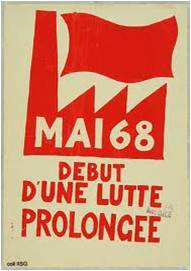
Barthes, of course, announces no ‘death of the author.’ Obviously J. K. Rowling, Dan Brown, Patricia Grace et al are all very much alive, however much or little of their ‘strong personality’ we may feel from time to time. Barthes’ piece, far from being an ‘announcement’ of the kind Stead doesn’t even deign to read, is a polemic, a political-aesthetic intervention, and an argument – amidst the rebellion and chaos of 1968 – against the author function in favour of the reader and reading. What has author-centred criticism produced?

For Barthes,

Classic criticism has never paid any attention to the reader; for it, the writer is the only person in literature. We are now beginning to let ourselves be fooled no longer by the arrogant antiphrastical recriminations of good society in favour of the very thing it sets aside, ignores, smothers, or destroys; we know that to give writing its future, it is necessary to overthrow the myth: the birth of the reader must be at the cost of the death of the Author.

How true this is for the era of the book club, the literary festival and enforced celebrity! Book reviewing and discussion is forced from the pages of newspapers while writers are coerced into ever-more restrictive routines of appearances, interviews and promotions. ‘Good society’ sets up the writer as a model for the ‘knowledge economy’ while at the same time disdaining writing, ambiguity, excess, interpretation. Kerry Prendergast, the (thankfully ex-) Mayor of Wellington used to talk about ‘creative people’, as if the arts were a realm apart from the proles serving lattes. Barthes’ polemic is, before everything else, an instance of democratic radicalism, insisting on the productive role of the reader.

A democratic role. Most frightening, in all this, for ‘traditional’ criticism, is the suggestion that study may be forced to encounter the object itself – language in all its slipperiness and ambiguity – instead of the closed meanings of authorial interpretation:

“Once the Author is removed, the claim to decipher a text becomes quite futile. To give a text an Author is to impose a limit on that text, to furnish it with a final signified, to close the writing. Such a conception suits criticism very well, the latter then allotting itself the important task of discovering the Author (or its hypostases: society, history, psyche, liberty) beneath the work: when the Author has been found, the text is "explained" - victory to the critic.”

This rhetoric is unthinkable without its context in 1968 – Barthes’ call (‘the birth of the reader must be at the cost of the death of the Author’) is a slogan alongside ‘be realistic, demand the impossible’ aiming itself against the deadening authorities of a capitalist system demanding stable meanings, compliant reader-workers, and efficient, unambiguous transmission of signs. (A counter-argument from another era, that consumer society in fact relies on the flourishing of Barthesian reader-producers, seems to have fallen away during the War on Terror: you were either with ‘us’ or with the terrorists, and the stability of Author and Authority, to say nothing of the Bible and Christ himself, reasserted itself with a startling lack of ambiguity).  


Fit audience, though few: this is what Barthes sets his face against, as he assembles a programme for reading that will follow texts where they lead, bypassing the gate-keeping figures of Author and Critic. Bureaucrats, Brecht told Benjamin once, are afraid of production – they never know where it might lead. Texts have more meanings than any single reading – or any Proper Noun of author – can possibly contain. They’re generators of meaning, and they take part in an endless process of generation:

“We know now that a text is not a line of words releasing a single “theological” meaning (the “message” of the Author-God) but a multidimensional space in which a variety of writings, none of them original, blend and clash. The text is a tissue of quotations drawn from the innumerable centers of culture. [. . .T]he writer can only imitate a gesture that is always anterior, never original. His only power is to mix writings, to counter the ones with the others, in such a way as never to rest on any one of them. [. . .] Succeeding the Author, the scriptor no longer bears within him passions, humors, feelings, impressions, but rather this immense dictionary from which he draws a writing that can know no halt: life never does more than imitate the book, and the book itself is only a tissue of signs, an imitation that is lost, infinitely deferred.”

The idea that this attention to the ‘tissue of quotations’ that makes up a text involves any neglect of ‘close reading’ and the textual textures older critics (or their ‘post-theory’ epigones) claim to treasure is dishonest, and the shrill preaching from the Right that they are the defenders of Literature is baseless arrogation. What could be more breathtakingly precise examples of close reader than Barthes on Balzac, de Man on Wordsworth, Derrida on Montaigne? These are readings that extend writing, to be sure; that, I suspect, is the productivity that leads them to be so mistrustred.

What is the purpose of the humanities?


Alain Robbe-Grillet called Barthes “a thinker of slippage”, and this is his great beauty and his great weakness. “Death of the Author” lives on as a text in a context quite foreign to its production and initial reception. Activist, interventionist, militant, Barthes’ writing has, in the following decades, been banalised in departments of literature prepared to important exotic critical names without facing the bracing challenge of the texts and ideas. He’s a writer now more scoffed at than read and, in one sense, it is entirely understandable that this should be so – if 1968 was in turn defeated by the neoliberal reaction from the late 1970s on then the Death of the Author became impossible, a dream living a half-life in English Departments abroad.

But Barthes’ example and challenge remains. The humanities are, currently, everywhere under attack. Insisting that what we do matters without further justification seems unlikely to help in this situation: if the universities struggle to find allies as the enemies of the humanities subject them to the language of profit, business outcomes and ‘relevance’, we may be forced to look to our own practice for reasons to ask for allies’ assistance.

This is the moment when, for me, narratology and teaching matter. Too many people take Barthes to mean that, with the ‘death of the Author’, anything goes, and that detail and scrupulousness disappear. His essay suggests the opposite: dispensing with the ideological myths of the Author as comforter and limit forces us to pay attention to those much-vaunted ‘words on the page’ and their implications, as well as the wider world of signification in which they operate.

In teaching, for me, the promise of ‘Theory’ so-called is not its ability to bamboozle students (the complaint of the outraged defenders of the Common Reader) but rather its organising of materials so as to enable a common vocabulary for dispute. Mieke Bal outlines the problem in a comment that has always inspired and troubled me:

“Teaching literature essentially amounts to showing off, as it were, unintentionally intimidating students: the more they find interest in the interpretation offered, the more they feel personally incapable of doing something like it. Offering terms which allow them to couch their views in publicly accessible language was in my eyes an important gain to be drawn from such structuralist exercises.

But disillusion quickly followed. For the terms of structuralist jargon, if understandable at all, intimidated the students even more, and, interestingly, for the same reasons: because, ultimately, the were not intersubjective, could not be understood.”

The disillusion here, I think, comes from our political moment – the great breakthroughs in literary criticism have arrived, not via pedagogical reformation, but on the back of political transformation. The Formalists share 1917 with the Bolsheviks; Barthes can assume an audience in the student and unionist rebels and revolutionaries of the ‘night of the barricades’ and the convulsions of 1968. Perhaps the Arab Spring – and the end of postcolonialism – will produce new audiences, new theories, new narratologies? Without this spur it is no wonder that Barthes’ insights desiccated into stylistic tics and academic mannerisms. That, though, is no reason to dismiss him for these.


Roland Barthes is one of the best stylists I’ve read, an exhilarating, provocative inspiration of a writer. I felt an excitement reading him – and being taught him by people like Andy Barratt and Simon Ryan in Otago, and Linda Hardy at Victoria – that in turn prompted me to think about how close reading, textual analysis, and social critique might profitably ‘blend and clash.’

A ‘post-Theory’ Humanities is no Humanities at all, and one that – if it is nothing more than the well paid studying without thought to the object of study or the audience for their research – scarcely deserves defending. The birth of the reader, again, can commence only with the rebirth of the ‘Death of the Author.’

Sources

CK Stead, “English in our Universities” The Writer at Work (Otago University Press, 2000), p. 117. Alain Robbe-Grillet’s line is from his Why I Love Barthes, trans. Andrew Brown (Polity, 2011).

Many thanks to Pip Adam, who was a silent but important and supportive presence through my teaching this semester. The students protesting in solidarity with their Auckland brothers and sisters offer another model too.
Tuesday, 8 May 2012

And who are the Chinese?


A few weeks ago, the Dominion Post ran as its feature letter to the editor a piece arguing that Anders Behring Breivik was right in theory, but wrong in practice.  (A banal but still important aside: imagine the obloquy facing anyone with an Arabic name writing in to make a similar claim about Bin Laden!) All of this as Breivik’s trial continues, and as we re-learn details of how he murdered scores of young social democrats and citizens. The usual, polite correspondence ensued; such views are part of the editorial sense of the acceptable, evidently, as is Chris Slater of Silverstream’s contribution. Writing on how Islam is “a supremacist and intolerant religion with increasingly conservative followers”, Slater proceeds, as if quoting a local columnist or a slightly eccentric public intellectual: “As Anders Breivik points out, multiculturalism is part of a deliberate…” 

This is all contemptible and morally distasteful, obviously: it’s also politically revealing. The Dominion Post’s earlier, eager persecution of local ‘terror’ means I wasn’t surprised of its coyness in the face of genuine, self-described terrorism of the fascist variety, and this reminds us that not all treatment of terror threats are equal. Besides, as Tad Tietze and Elizabeth Humphrys have argued in a series of very important posts, media treatment of Breivik’s trial involves a dangerous interaction of de-politicisation and political expansion. De-politicisation, as speculation on Breivik’s mental state distracts attention from the detailed, programmatic basis on which his terrorist attacks were carried out. Political expansion, as this very programme finds its echoes all across the mainstream media: Breivik’s hateful rantings, like so much produced by European fascism currently, are echoes and repetitions from the much more respectable, and more widely syndicated, discourse of Islamophobia and war-on-terror chest-puffing that passes for serious thought on the constitutional Right. (Australia’s own intellectual embarrassment, Keith Windschuttle, was one of the many publicly-feted cranks and official racists Breivik drew on).

Understanding – and confronting – fascism is an urgent question for the left, in Europe and elsewhere. Utoya’s tragedy is also a warning.


The Shadow

A series of events these last months have had me reflecting on a local shadow of the Breivik trial, one which doesn’t match the current atrocity in the scale of loss and suffering, but which contains all too many parallels with the current scene of semi-apology, depoliticisation, and race hatred.


On 24th September 1905 Lionel Terry shot Joe Kum Yung in Wellington. Full of the racial theories and eugenic obsessions that characterised conservative thinking of his time (and, shamefully, that infected and paralysed much of the Australasian Left), Terry intended his murder as a political act, to rouse the colony against the threat of the ‘Yellow Peril’ and Chinese influence. He had travelled to Wellington distributing copies of his The Shadow, full of anti-Chinese poems and ravings. He turned himself in after the killing, and used his trial as a platform for racism.

As with Breivik, much of Terry’s case centred around his mental state. His later life, at Seacliff and elsewhere, make it clear that he was clearly a very disturbed figure, but, despite the prominence given to it in most historical accounts, the details of this particular petty individual’s life are less important than the context of his crime. He found huge public support, and it’s impossible to imagine this purportedly humanitarian concern being mobilised were it not connected to deeper sympathies with his anti-Chinese message. Clemency was granted, and the death penalty initially set transformed into a sentence. Petitions were gathered. Prominent figures spoke out.

A policeman who had travelled some of the way to Wellington with Terry described him in ecstatic terms:  'He looked a perfect picture. As fine a man as ever I saw – bolt upright, and with as free an action as you'd see on an athlete.' Some years later, once Terry was at Truby King’s asylum at Seacliff, locals wrote to the Otago Daily Times in support of his escapades: one correspondent wrote in 1907 that Terry would be “an honoured guest at 95 percent of the homesteads of Central Otago. Had his capture depended on the residents of Central Otago he would never have returned to Seacliff.” Truby King, himself a bigoted eugenicist well in sympathy with anti-Asian political programmes and fantasies at the time, developed a long-term friendship with Terry.

Madness is hardly the question here – why did it manifest itself as a murderous obsession with the Chinese? The answer to this can be provided by a glance through any of the mainstream publications of his time. Ettie Rout, now remembered for her work around birth control, wrote in her Maori Mythology of the “truly fearful prospect” that the “Yellow race” would overwhelm the white.  (This is much the same line used by European fascism around the threats posed by multiculturalism, although given contemporary ‘culturalist’ twists). Dr Doris Gordon, founder of the NZ Obstetrical Society, met Terry at Seacliff and recorded these impressions: “'A man of wonderful physique and a brilliant brain. Terry would propound his brilliant hypotheses; by the time he finished most of the hypnotised students were wondering who should be labelled lunatic and who custodian!'

Terry drew then, and developed, an existing discourse of hatred pre-prepared for him. The parallels aren’t exact, of course; there was no fascist movement in 1905 for which this murder could act as an organising issue; the ‘cultural’ politics of our day (Breivik’s hated cultural Marxism) have replaced the pseudo-sciences of an earlier era.

In memory of Joe Kum Yung

Joe Kum Yung has, for the most part, slipped from the focus of narratives of the 1905 attack, and it’s easy to see why. He was a normal man, elderly, incidental, until his death, to the story, chosen for his skin colour and the ease with which he could be murdered.

The poet Alison Wong, in her extraordinary and beautiful debut novel As the Earth Turns Silver, rescues Joe Kum Yung from posterity’s condescension, and grants him posthumous dignity:

Joe Kum-yung was not a clansman, but with maybe three hundred in all of Wellington, every Chinese was a brother, especially one shot at point-blank range. Yung heard from Fong-man, who heard from Joe Toy, that Kum-yung had been walking home when a man came up behind him and shot him twice in the head. No one got a good look at the murderer. It was a Sunday evening. It was dark. Haining Street was almost deserted. The man with the revolver wore a long grey coat. He was tall. He was gweilo. When Joe Toy got there, his cousin was lying outside Number 13 in a dark pool of blood, a paper bag of peanuts scattered around him.

Wong’s novel, a detailed and passionate work of historical reconstruction, restores some attention to the Chinese voices in this period of sustained hostility and European ill-will.


And who are the Chinese?

This isn’t history, though, or not here. For months now television and radio has been interspersed with announcements for shows analysing the dangers of more land passing to ‘the Chinese.’ The Yellow Peril may as well never have left, and neither, shamefully again, has sections of the left’s complicity with it. Loudest in their condemnation of foreign ownership have been Labour and the Greens.

And who are the Chinese, the threat to those national treasures the Crafar Farms? If we’re to enter stakes in any tauiwi entitlement register, my own memories are of Cantonese-speaking Chinese families I met at my Dunedin primary school, many of whom had family connections in the region dating back to the Gold Rush. A longer period of settlement, to be sure, than that of my own family’s post-war arrivals, and yet this is unlikely to prevent the verbal abuse and physical threats that follow along from talk of ‘foreigners.’

Political issues are in play too. I’ve written elsewhere on the Crafar farm sale, and have, in the organisation I’m a part of, tried to hold to something like a line involving socialist internationalism.


In the cultural sphere, though, and amongst those who wish to see themselves as liberal or progressive, we’re rotten with a xenophobia so strong it no longer needs to recognise itself. You can buy hoodies with the slogan “Born Here” marked on them, a phrase I hadn’t seen since the white race riots and attacks on Lebanese people in Sydney in 2005. For New Zealand, though, the message is so universal to seem like it’s lost any self-consciousness of its political purpose and exclusionary effect.

Neo-nazis marched, quite without opposition, through Christchurch not long ago. Violent attacks against Asians are reported around the country. Slogans around ‘foreign ownership’ become a common leftist currency, and smuggle in with them more direct, forthright racisms. (One placard from last week’s hikoi against asset sales in Wellington involved nothing more than a Chinese flag with a black cross through it).

Amongst all this, the Terry trial comes through to me like a moment of the pre-history of this present.  Intellectual climates are built through asides, gestures, hints, implications – the pitch around Islamohophobia was built over many years, and we see its results.

Anti-Asian racism is, in a settler colony like this one, part of the obsessively re-worked anti-myths of the Pakeha world, the fears of invasion nourished by generations of invaders. They’re being revived, consciously, and dangerously, all around us.

In March David Shearer made this comment on TVNZ’s Q&A:

Yeah, but what I’m doing here is saying we’re not closing the door to all foreign investment. I mean, it’s very clear in the bill that I’m putting forward. What we’re saying is that our land, our valuable land is best farmed for New Zealanders and the value flows back to New Zealand as well. What we don’t want to see is foreign corporates coming in here, buying up lots of land, and the value and the benefits flowing out of New Zealand, and that’s very very important.


Who are these New Zealanders? Who are these foreigners? What does it mean to say valuable land is ‘best farmed for New Zealanders’? (With hundreds locked out from a major chain of meatworks, that last question arrives with a hollow kind of mirth).


Alison Wong carries out a piece of cultural redemption and memory, and asks her readers to see the world as Joe Kum Yung. Narrative and imagination here offer political possibilities. Too many of the current political voices – official ‘left’ as much as governmental right – offer the far-too-familiar filter of all of our numerous Lionel Terrys.


 Sources

Dr Gordon’s quote I’ve taken from Hilary Stace’s very helpful article on eugenics in New Zealand. Philip Ferguson’s PhD thesis on the White New Zealand policy – available as a PDF here – is the best piece I’ve read on the politics of exclusion. 

ShareThis