Wednesday, 15 August 2012

He'll be the last to know


This is a picture of cultural history, and of course also its absence and disregarded status. Until a year or so ago this site on Dundas Street was where you could walk past Hone Tuwhare’s old cottage, a surprisingly wee building to have housed such a well-built and handsomely imposing man. The street’s changed, as rental property colonises the last of the family homes and cheaper houses, and something more profitable is bound to appear in this space soon. Still, it came as a shock, the last time I was home, to be forced into seeing an absence.

I saw Tuwhare read twice, once in a bravura performance he gave in my school library, closing with a reading of ‘Monologue’ rendered so brilliantly – and uncannily Glasgwegian – it's stuck with me ever since. (I like working near a door). The other time, a more chaotic and disruptive moment in the Public Library (Marx and Engels! What about the workers?) sticks for other reasons.

Still, there was once a house here, and a link with a living sense of cultural energy. It’ll be replaced, soon enough, with something profitable for a landlord.

He sensed a sea of receding
faces picked himself up
and promptly emptied his guts
on the footpath fervently calling
for his bleeding mate Christ
who was nowhere to be seen

Later wearing a stiff mask
of indifference
he pissed himself in the bus

The two places where I learnt properly to drink – by which I mean of course to drink properly, to drink improperly, to get caught up in all the waste and rudeness and embarrassment and selfish shame of alcohol and its delusions – don’t exist anymore either. I can’t pretend a nostalgia for either the Albert Arms or the Corner Bar of the Captain Cook, except perhaps in the memory of once meeting Tuwhare there, with Bill Dean in 1999, and hearing him recite Burns. What’s replaced them – a ghastly, globalized ‘Irishness’ where the Albert once was, and yet more barn space in an ever-more dystopian Cook – point at trends in the city more widely.

Much is made of the ‘student experience’ and the life of the Scarfie, and many of the same people who enjoy blether of that kind – some, indeed, professionally – are ready in other seasons to offer a whole variety of moralisms and lessons over riots, vomit, and anti-social behavior.

I never remember the sun in Northeast Valley


Exploring the attractions and damage of alcohol – which may well be a way of describing the same experience, or the same desire – Dunedin has produced two works of real literary genius, and both of them offer  lessons beyond the aesthetic.

Carl Shuker’s The Lazy Boys (2006) is one of the best novels of the 2000s. Written before, The Method Actors, his occult psychogeography of Tokyo, but published in the period after this ‘first’ novel’s success, it’s only in comparison to this companion that The Lazy Boys can seem underdeveloped or hesitant. I read it in one horrified sitting the Christmas of 2006, recognizing – with something close to jealousy or disgust, and an agitated excitement – that a whole realm our own social world had been drawn in to representation. Shuker’s characters are the flotsam of undergraduate life, the people whose ‘talent is being wasted’ and the whole array of pubs and liquor stores that open up as young people discover the serious routines and patterns proper drinking demands:

We are sitting, me and Matt, at the foot of the mossy concrete wall that encloses the Leith River. The river is just a trickle at this time of year. We’re drinking milk bottle beer and watching the river glittering blackly in the light from the streetlights on Dundas. Matt has puked already, felt sick and stuck his fingers down his thoart, and he’s telling me this thing bitterly, thinking for some reason that I’m angry at Nick.


I’ve read that, when it was published in the United States, The Lazy Boys was received as something like a frat-novel, a boys-gone-wild tale of wild times and exhuberance. Having grown up in Dunedin, the possibility of an assessment like this staggers me: Shuker’s produced a novel of our particular South Island miseries, alienations, hangovers, dislocations. There are parties aplenty, to be sure, but that seems hardly the point.

Parties, nowadays, lead to moralising talk about riots and anti-social behaviour. The generation before your own, unlike today’s graceless versions, was always the last to know how properly to enjoy themselves, as is the case everywhere else I suspect, but the couch-burning students I passed on my junk mail runs in the early 1990s (all of whom must now be in their 40s or near enough) don’t seem, in memory, all that different from today’s self-destructive youth.

I grew up close to the university, and have no affection for the misogyny, macho affectation and swagger that passes for student culture on Castle Street, but something about the sustained outrage aimed at rioters down the years sticks in my throat. Having marketed the Scarfie experience for years, there’s a stench of hypocrisy about in the rush to condemn its obscene supplement.


Those loudest in their condemnation of anti-social behaviour have, in their own ways, profited from it handsomely indeed. The rotting flats and cold, damp rooms of North Dunedin fund many a Wanaka holiday house, and – as non-debates over a Capital Gains Tax suggest – plenty of middle class households in Maori Hill and Roslyn rely on sub-standard properties to help fund their own children’s educations. Landlords are a noticeable absence in most talk when there's a search for problems, to say nothing of soutions. The pressurised world of consumerist alcoholic binges and litter-cluttered streets is part of a particular ‘community’ economy of exploitation and exchange, not its negation.

The Slipway, Dunedin’s other work of genius, takes this part of the social world as its target: GrahamBilling’s novel – a late modernist masterpiece scandalously neglected and underread – covers a few significant days in the life of Geoffrey Targett, heir to a nearly bankrupt shipping line, and regular at the Golden Age Hotel. Student drunks reveal themselves by having to stagger home, but plenty of well-off boozers can collapse on the kitchen floor at the end of an otherwise ‘elegant’ dinner party. Billing takes this world, and estranges it through a Leith Valley -  Port Chalmers – Taieri River axis. His mastery of free indirect discourse – and with it his ability to capture something of the anxious tightening the drinker needs to keep panic at bay – can only really be conveyed through a proper, long quote:

“I know the sort of things you people go in for, all that brass and chrome hardware. Anybody would think you could fool the fish. Well, you can’t. There’s nothing like the natural way.” McTaggart’s voice was already hoarse from such a speech and to Geoffrey it was no surprise. McTaggart had sucked lemon, honey, and blackcurrant throat pastilles as long as he could remember. He felt rather less shy. It was probably true that drinking was also an act of self-medication. One was being one’s own doctor. But if McTaggart ate a tin of medicated honey, lemon, and black-currant pastilles every day that really was an extreme case of self-medication and a whole lot worse than taking a few brandies for a cold or a few gins to settle one’s stomach.

Geoffrey took out his cheque book. Here was the acid test: the quality of the writing. There were distressing times when he would forget to write the last ‘t’ on the end of his signature, creating a serious dilemma. The bank might refuse to accept the cheque, yet he could not alter the signature because that would look even more like a forgery. It was not the kind of error in filling in a cheque form that one could initial. Paying by cheque was a kind of sport.

“Targett,” said McTaggart. “You must be Geoffrey. Was that the name, or was it George or Giles?” He was such an expansive man all of a sudden, leaning back at his counter with his thumbs – yes, his thumbs – actually stuck in his waistcoat pockets, his white hair standing on end, and his small eyes glistening like the currants in the painting on his tin of pastilles. He cleared his throat with an enormous noise. “I’ve got something for you.”

“Geoffrey,” said Geoffrey.

“Of course it is. Your father used to bring you in here when you wore short pants.”

McTaggart’s posture was avuncular, Geoffrey thought in a panic.

Free indirect discourse allows Billing the chance to position us side-on to Geoffrey, inhabiting his consciousness while at the same time never quite being sure which are his delusions. His refuge, a great comfort for drunks, is a intensely felt interior pomposity and victimhood:

Why was one always forced to establish relationships with mean people who went around complaining about life? They seemed to attack only because they wanted to be associated with people more important and less dignified than themselves. If they pleaded or said something pleasant their superiors would never give them a second look. One didn’t mean superiors exactly in the same class or social sense but in some intangible sense of competence, intellectual or managerial or social. There was a status bastion at which the little people flung themselves like a dwarfish army besieging a dragon in his mountain, turning their inadequacy to advantage by holding it out like a battering ram. At the same time they held up banners showing bleeding hearts to catch the sympathy of the spectators.


Jesus what a jerk

The university has in recent years developed a set of responses to try and prevent the Castle Street riots recurring – a ban on alcohol advertising and sponsorhsip at University functions, for instance – that seem hard to quarrel with. At the same time, though, all discussions of the city's social problems seem to swerve from the essential fact: the riots, much like their weekly echoes in the street fights, vomiting and shouting all the way from Bath Street to the Gardens, are symptoms, and symptoms of a social disorder no amount of regulation will resolve.


Next year it will be twenty year since Dunedin’s police riots, when officers attacked students protesting outside the Registry building against fee rises. That event sparked a furious round of student protest and activism in response, and contributed to the effervesent and exhuberant political culture which revived across New Zealand campuses in the early 1990s.


The contrast with Castle Street couldn’t be clearer, as atomised and disoriented drinkers threw themselves against a state force with little sense of their purpose or its consequences. The point of the comparison, though, isn’t to claim nostalgia for the past but to insist on this shift as evidence of the huge cultural cost involved in that struggle’s loss. As the International Socialists insisted at the time of these latest riots – to some obloquy and scorn – the riots were an expression of the ‘student culture’ Dunedin’s landlords, pub owners and businessmen had created, not its abberation.

They represent, in other words, a sign of the desperation and alienation produced by the very anti-social, individualist logic of an aggressive consumerist, user-pays neoliberalism, precisely what the victims of 1993’s police riot were fighting against. They’re a cost, in one sense, and, in another, part of the balance sheet.


A rush and a push and the land that we stand on is ours

That cost already has its own cultural tribute, one located, ironically enough, almost opposite the erasure of Tuwhare’s home. Tuwhare’s drunks are remembered in poems alongside Communists, protesters and artists, a social Dunedin of mass movements, dissident culture and oppositional, engaged political attitudes.


Strangeways, the flat at the centre of Shuker’s Lazy Boys, isn’t mythologised as with the house in Scarfies. It is, instead, the narrative centre of the representation of a kind of conformist excess, as storyworld and ‘real life’ details collide and clash:

As I’m doing this some of them start shouting ‘meat, meat, meat’ and it’s because Marc Ellis from Gardies has arrived. He’s smiling and someone passes him a jug and I notice all the girls on the couches are looking over at him.

I pick up the half-full jug from the bar and drink a lot of it. All of them are standing side by side and they’ve all got their arms folded or their hands on their hips and they’re all mostly really big. One of them has RUNT written on his forehead. I’m leaning back on the long white counter and trying to look casual but it’s covered in beer and empty bottles and the water soaks through the back of my shirt quickly so I stand up again, take bigger and bigger drinks from my jug. A Maori guy come out a door into the kitchen and inside there’s the mirror of a bathroom and he’s got long hair and he’s wearing an Otago rugby jersey with a huge collar and when he turns around to shut the door BLACK BASTARD in big white letters is written on his back above the number 14. Over by the window is one of the girls from the taxi, the one in the pink Holiday Tee sweatshirt and tan moleskins, and she’s talking to a dark-haired girl who looks like she’s maybe sixteen and she’s wearing dark blue moleskins and a beige sweatshirt with Country Road written on it in pitch letters and they’re sharing a cigarette and laughing about something they know together.

That’s cultural history, too, and heritage, however much we might want to disavow its familiarity.


***

SOLITARY DRINKER

Standing in the same old place
He thought ‘I know that silly face.’
And there beneath the spirits shelf
The mirror showed his silly self.

He saw himself with some surprise
A sorry sod with headlamp eyes
AFORE YE GO the slogan read,
But he stayed on and stared ahead.

‘I cannot stand this blasted place,
I cannot stand my blasted face.’

The public bar was through the hall:
It had no mirrors on the wall.


Sources

The line ‘I never remember the sun, in Northeast Valley’ is from Janet Frame’s ‘Dunedin Poem,’ in her The Pocket Mirror. Carl Shuker’s The Lazy Boys (Penguin), pp. 97, 214. There are lots of copies of The Slipway (London: Quartet, 1974) in second hand bookshops around the country; I’ve quoted from pp. 47, 74. The final poem is Denis Glover’s, from his Since Then (1957). Hovering behind all this is Conrad Bollinger’s Grog’s Own Country (1959); he taught in the English Department at VUW before his untimely death, and seems more and more a source of inspiration.


Friday, 29 June 2012

Anthems for Nowhere (II)


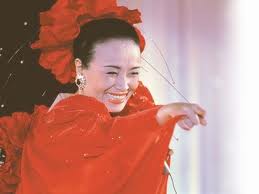
I still love Misora Hibari, and always will, but I’m not sure I can keep putting her to such easy discursive work as I have until now. A few years ago here I tried to position her songs as ‘anthems for nowhere’, songs for the stateless, music from Japan’s unacknowledged (and well-night un-acknowledgeable) Zainichi community. There’s so much packed in to that reading – and such comforting assurance that personal taste and political commitment align – that I’m loathe to let it go.


But Sayonara Amerika, Sayonara Japan, Michael K Bourdaghs’ fabulous, beautifully written and spritely new book, a 'geopolitical prehistory of J-Pop', forces me to do just this. I first heard of Misora’s Zainichi status from friends in Korean groups in Tokyo and, when reputable English-language sources repeated their claims, felt comfortable repeating the affiliation as fact. Bourdagh felt that way once too, but, in the process of researching his book, he’s become more circumspect. Misora was public and open about all sorts of other damaging aspects of her life – drinking, gang connections, pain in love, disappointment following the river of life – so why should she have been reticent about any Korean heritage? The sources Bourdagh follows – and his footnotes show he’s a diligent and serious scholar – all lead him to false ends, further rumours, unspecified memories.


All of this, for the cultural historian, isn’t such a problem, though; Bourdagh is as interested in why certain rumours persist as he is in their truth and provenance. Part of the great pleasure of his book is the way it marries the academic and the popular: as ‘area studies’ in Cold War-era US universities successfully translated the Japan of the English-language imaginary from barbarian threat to beautiful ally, so too local Japanese popular cultural practices worked to exclude the recent past (Japan’s colonial project) in order to construct an American-Japanese cultural relationship at the expense of messier politico-cultural remnants.


The concealed past of Asianness in Japanese pop reemerged in other ways too. Like a return of the repressed, it flickered in and out of view like a ghost or a shadow, a kind of monstrous apparition. 

Misora, like Godzilla and Rikidozan (Bourdagh here follows Yoshikuni Igarashi), helps produce ‘the unnameable,’ little remnants of Korean and Chinese cultural contact the ideological ‘truth’ of post-war that 日本人論- the untranslatable, the unique, the de-historicised – wishes so earnestly to deny. Personal ancestry doesn’t matter here so much as musical context: enka, in its appeal to ideals of unique Japanese national essences always contains within itself echoes of the kind of cross-cultural work that went in to producing its possibility.


Bourdagh’s target isn’t so much the ‘real’ Misora, then – whether Zainichi or ‘real’ Japanese – but what she means:


No other person so fully embodies the entirety of post-war Japanese song. And while many previous critics have sought in Hibari the archetypes of a national essence, I am more interested in exploring what her putative Japaneseness tells us about the geopolitical imagination of popular music during this period – about the pleasures that the Cold War opened up for Japanese music lovers, as well as those that it closed off.


One of those pleasures was Misora’s transformation from symptom of U.S. cultural and political dominance (she built her career as a canny imitator of an older boogy-woogy star) into what Bourdagh calls ‘a powerful icon of musical decolonization.’


Enka can’t emerge properly, Bouradgh suggests, until the world it claims to represent is safely distanced. Nostalgia never can be what it used to be – as an increasingly urbanized audience settles in to the consumer society of the long boom, then Misora and others can perfect their laments for rural Japan, traditional simplicity, and country ways. Always, and at each stage of her career, at the very pioneering edge of recording technology, Misora used that space to construct fantasies of the past.


Fantasies of the past. It’s at this point that my own readings become more awkward. I recognise some of that nostalgia in my own listening habits; enka became ‘hearable’ for me only once I’d left Tokyo, and only once I became able to place it as the location of another, desirable, Japan-based life, one I’m coming to realize won’t ever be mine, and would cease to be desirable as soon as it became possible. Enka's themes of loss and longing capture that so well it's hard to imagine them without some 'other time' as projection and referent.


Fantasy projections, there, for sure, but pleasures too.  These are still my anthems from nowhere, not least because of the rumours that sustain them. Zainichi remains the un-named country in Asia – its Utopia, in the spirit of Wilde's map – and Misora’s re-inventions might as well grant her citizenship there.


Sources


Michael K Bourdaghs Sayonara Amerika, Sayonara Nippon (New York: Columbia University Press, 2012) really is a fabulous book. Buy it if you can, or see if your library can order it in. The other chapters – on Sakamoto Kyu, jazz, rockabilly, folk, and more, are each as illuminating as the other. 

Friday, 8 June 2012

Rebirth of the Death of the Author


I love teaching first-year classes. There’s an expectation sometimes that this won’t be the case, or that more advanced courses offer more exciting situations, which they can do, of course, but the way in which the adjective ‘undergraduate’ can be used as an insult seems to me not so much snobbish as silly. Undergraduate teaching makes you work. The students don’t have to be there, and they’re also none too sure if they’re going to persist with your discipline. Each lecture becomes an exercise in both attention-seeking (of a good kind, hopefully, and often, I’ll admit, of the more common and vain variety too), and advocacy. With first years you have to argue for your discipline in a way more advanced settings are less likely to require. This is a situation radicals and reformers ought to revel in, and for good reasons: asking a room why they’re working the way they do – what the point, in my local experience, of English is at all – sets the question off in unexpected directions.

Today’s my last day of teaching for the semester. I take a 100-level course in narrative theory, and it’s one of the most stimulating teaching experiences I’ve had. The course itself is – or should be, or is as I fantasize it – an exercise in ostranienie, estrangement, V-effekte. Narratology tries to make the tasks and approaches of literary texts blurt out their own secrets and techniques, to operate upon the body of literature (we murder to dissect, friends!) in ways that will render it less mysterious, more amenable to common discussion, dissension and debate.

I’m convinced this is a good thing, and teaching it over a few years now – to a group of unruly, often bored, not always enthusiastic teenagers and others – convinces me to that we’ve allowed a great loss to take place in accepting defeat in the so-called Theory wars. Theory, our opponents suggest, took away from the ‘Common Reader’, reduced the literary experience. My feeling, interacting with students dealing with University English for the first time, is that this taking way may well be worthwhile. If literary studies are kept inside the vocabulary of ‘taste’ –  a discourse sitting in its impenetrability along with wine appreciation and interior decorating – what masquerades as critical judgement will remain a substitute code of class, a way of indicating allegiance to a social order that need not justify itself because ‘distinction’ clothes itself in the language of feeling.

Our opponents, of course, take quite a different account of these last decades’ battles. Here is C. K Stead:


Barthes, and I think Foucault too, has announced ‘the death of the author.’ Barthes’s essay on this subject is difficult; and there is a sense in which it can be said to be wrong-headed, perverse and untrue. The more we read the work of any of the great writers, the more we have the strong impression of a single personality encompassing the whole oeuvre. Dead or alive, the author lives in every sentence; and recognising this, the ‘common reader’ is likely to feel a certain impatience with Barthes’s argument.

This is nonsense, and lazy nonsense too. Would a teacher of Stead’s obvious erudition and distinction accept a student essay announcing that ‘Shakespeare, and I think Webster too, wrote a play called The Duchess of Malfi’? Besides, this ‘strong impression of a single personality’ may be what suffocates literature, what turns readers from texts, what blocks new impressions and readings.

Why I love Roland Barthes


Barthes, of course, announces no ‘death of the author.’ Obviously J. K. Rowling, Dan Brown, Patricia Grace et al are all very much alive, however much or little of their ‘strong personality’ we may feel from time to time. Barthes’ piece, far from being an ‘announcement’ of the kind Stead doesn’t even deign to read, is a polemic, a political-aesthetic intervention, and an argument – amidst the rebellion and chaos of 1968 – against the author function in favour of the reader and reading. What has author-centred criticism produced?

For Barthes,

Classic criticism has never paid any attention to the reader; for it, the writer is the only person in literature. We are now beginning to let ourselves be fooled no longer by the arrogant antiphrastical recriminations of good society in favour of the very thing it sets aside, ignores, smothers, or destroys; we know that to give writing its future, it is necessary to overthrow the myth: the birth of the reader must be at the cost of the death of the Author.

How true this is for the era of the book club, the literary festival and enforced celebrity! Book reviewing and discussion is forced from the pages of newspapers while writers are coerced into ever-more restrictive routines of appearances, interviews and promotions. ‘Good society’ sets up the writer as a model for the ‘knowledge economy’ while at the same time disdaining writing, ambiguity, excess, interpretation. Kerry Prendergast, the (thankfully ex-) Mayor of Wellington used to talk about ‘creative people’, as if the arts were a realm apart from the proles serving lattes. Barthes’ polemic is, before everything else, an instance of democratic radicalism, insisting on the productive role of the reader.

A democratic role. Most frightening, in all this, for ‘traditional’ criticism, is the suggestion that study may be forced to encounter the object itself – language in all its slipperiness and ambiguity – instead of the closed meanings of authorial interpretation:

“Once the Author is removed, the claim to decipher a text becomes quite futile. To give a text an Author is to impose a limit on that text, to furnish it with a final signified, to close the writing. Such a conception suits criticism very well, the latter then allotting itself the important task of discovering the Author (or its hypostases: society, history, psyche, liberty) beneath the work: when the Author has been found, the text is "explained" - victory to the critic.”

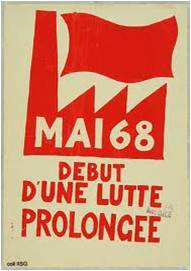
This rhetoric is unthinkable without its context in 1968 – Barthes’ call (‘the birth of the reader must be at the cost of the death of the Author’) is a slogan alongside ‘be realistic, demand the impossible’ aiming itself against the deadening authorities of a capitalist system demanding stable meanings, compliant reader-workers, and efficient, unambiguous transmission of signs. (A counter-argument from another era, that consumer society in fact relies on the flourishing of Barthesian reader-producers, seems to have fallen away during the War on Terror: you were either with ‘us’ or with the terrorists, and the stability of Author and Authority, to say nothing of the Bible and Christ himself, reasserted itself with a startling lack of ambiguity).  


Fit audience, though few: this is what Barthes sets his face against, as he assembles a programme for reading that will follow texts where they lead, bypassing the gate-keeping figures of Author and Critic. Bureaucrats, Brecht told Benjamin once, are afraid of production – they never know where it might lead. Texts have more meanings than any single reading – or any Proper Noun of author – can possibly contain. They’re generators of meaning, and they take part in an endless process of generation:

“We know now that a text is not a line of words releasing a single “theological” meaning (the “message” of the Author-God) but a multidimensional space in which a variety of writings, none of them original, blend and clash. The text is a tissue of quotations drawn from the innumerable centers of culture. [. . .T]he writer can only imitate a gesture that is always anterior, never original. His only power is to mix writings, to counter the ones with the others, in such a way as never to rest on any one of them. [. . .] Succeeding the Author, the scriptor no longer bears within him passions, humors, feelings, impressions, but rather this immense dictionary from which he draws a writing that can know no halt: life never does more than imitate the book, and the book itself is only a tissue of signs, an imitation that is lost, infinitely deferred.”

The idea that this attention to the ‘tissue of quotations’ that makes up a text involves any neglect of ‘close reading’ and the textual textures older critics (or their ‘post-theory’ epigones) claim to treasure is dishonest, and the shrill preaching from the Right that they are the defenders of Literature is baseless arrogation. What could be more breathtakingly precise examples of close reader than Barthes on Balzac, de Man on Wordsworth, Derrida on Montaigne? These are readings that extend writing, to be sure; that, I suspect, is the productivity that leads them to be so mistrustred.

What is the purpose of the humanities?


Alain Robbe-Grillet called Barthes “a thinker of slippage”, and this is his great beauty and his great weakness. “Death of the Author” lives on as a text in a context quite foreign to its production and initial reception. Activist, interventionist, militant, Barthes’ writing has, in the following decades, been banalised in departments of literature prepared to important exotic critical names without facing the bracing challenge of the texts and ideas. He’s a writer now more scoffed at than read and, in one sense, it is entirely understandable that this should be so – if 1968 was in turn defeated by the neoliberal reaction from the late 1970s on then the Death of the Author became impossible, a dream living a half-life in English Departments abroad.

But Barthes’ example and challenge remains. The humanities are, currently, everywhere under attack. Insisting that what we do matters without further justification seems unlikely to help in this situation: if the universities struggle to find allies as the enemies of the humanities subject them to the language of profit, business outcomes and ‘relevance’, we may be forced to look to our own practice for reasons to ask for allies’ assistance.

This is the moment when, for me, narratology and teaching matter. Too many people take Barthes to mean that, with the ‘death of the Author’, anything goes, and that detail and scrupulousness disappear. His essay suggests the opposite: dispensing with the ideological myths of the Author as comforter and limit forces us to pay attention to those much-vaunted ‘words on the page’ and their implications, as well as the wider world of signification in which they operate.

In teaching, for me, the promise of ‘Theory’ so-called is not its ability to bamboozle students (the complaint of the outraged defenders of the Common Reader) but rather its organising of materials so as to enable a common vocabulary for dispute. Mieke Bal outlines the problem in a comment that has always inspired and troubled me:

“Teaching literature essentially amounts to showing off, as it were, unintentionally intimidating students: the more they find interest in the interpretation offered, the more they feel personally incapable of doing something like it. Offering terms which allow them to couch their views in publicly accessible language was in my eyes an important gain to be drawn from such structuralist exercises.

But disillusion quickly followed. For the terms of structuralist jargon, if understandable at all, intimidated the students even more, and, interestingly, for the same reasons: because, ultimately, the were not intersubjective, could not be understood.”

The disillusion here, I think, comes from our political moment – the great breakthroughs in literary criticism have arrived, not via pedagogical reformation, but on the back of political transformation. The Formalists share 1917 with the Bolsheviks; Barthes can assume an audience in the student and unionist rebels and revolutionaries of the ‘night of the barricades’ and the convulsions of 1968. Perhaps the Arab Spring – and the end of postcolonialism – will produce new audiences, new theories, new narratologies? Without this spur it is no wonder that Barthes’ insights desiccated into stylistic tics and academic mannerisms. That, though, is no reason to dismiss him for these.


Roland Barthes is one of the best stylists I’ve read, an exhilarating, provocative inspiration of a writer. I felt an excitement reading him – and being taught him by people like Andy Barratt and Simon Ryan in Otago, and Linda Hardy at Victoria – that in turn prompted me to think about how close reading, textual analysis, and social critique might profitably ‘blend and clash.’

A ‘post-Theory’ Humanities is no Humanities at all, and one that – if it is nothing more than the well paid studying without thought to the object of study or the audience for their research – scarcely deserves defending. The birth of the reader, again, can commence only with the rebirth of the ‘Death of the Author.’

Sources

CK Stead, “English in our Universities” The Writer at Work (Otago University Press, 2000), p. 117. Alain Robbe-Grillet’s line is from his Why I Love Barthes, trans. Andrew Brown (Polity, 2011).

Many thanks to Pip Adam, who was a silent but important and supportive presence through my teaching this semester. The students protesting in solidarity with their Auckland brothers and sisters offer another model too.

ShareThis