Friday, 8 June 2012

Rebirth of the Death of the Author


I love teaching first-year classes. There’s an expectation sometimes that this won’t be the case, or that more advanced courses offer more exciting situations, which they can do, of course, but the way in which the adjective ‘undergraduate’ can be used as an insult seems to me not so much snobbish as silly. Undergraduate teaching makes you work. The students don’t have to be there, and they’re also none too sure if they’re going to persist with your discipline. Each lecture becomes an exercise in both attention-seeking (of a good kind, hopefully, and often, I’ll admit, of the more common and vain variety too), and advocacy. With first years you have to argue for your discipline in a way more advanced settings are less likely to require. This is a situation radicals and reformers ought to revel in, and for good reasons: asking a room why they’re working the way they do – what the point, in my local experience, of English is at all – sets the question off in unexpected directions.

Today’s my last day of teaching for the semester. I take a 100-level course in narrative theory, and it’s one of the most stimulating teaching experiences I’ve had. The course itself is – or should be, or is as I fantasize it – an exercise in ostranienie, estrangement, V-effekte. Narratology tries to make the tasks and approaches of literary texts blurt out their own secrets and techniques, to operate upon the body of literature (we murder to dissect, friends!) in ways that will render it less mysterious, more amenable to common discussion, dissension and debate.

I’m convinced this is a good thing, and teaching it over a few years now – to a group of unruly, often bored, not always enthusiastic teenagers and others – convinces me to that we’ve allowed a great loss to take place in accepting defeat in the so-called Theory wars. Theory, our opponents suggest, took away from the ‘Common Reader’, reduced the literary experience. My feeling, interacting with students dealing with University English for the first time, is that this taking way may well be worthwhile. If literary studies are kept inside the vocabulary of ‘taste’ –  a discourse sitting in its impenetrability along with wine appreciation and interior decorating – what masquerades as critical judgement will remain a substitute code of class, a way of indicating allegiance to a social order that need not justify itself because ‘distinction’ clothes itself in the language of feeling.

Our opponents, of course, take quite a different account of these last decades’ battles. Here is C. K Stead:


Barthes, and I think Foucault too, has announced ‘the death of the author.’ Barthes’s essay on this subject is difficult; and there is a sense in which it can be said to be wrong-headed, perverse and untrue. The more we read the work of any of the great writers, the more we have the strong impression of a single personality encompassing the whole oeuvre. Dead or alive, the author lives in every sentence; and recognising this, the ‘common reader’ is likely to feel a certain impatience with Barthes’s argument.

This is nonsense, and lazy nonsense too. Would a teacher of Stead’s obvious erudition and distinction accept a student essay announcing that ‘Shakespeare, and I think Webster too, wrote a play called The Duchess of Malfi’? Besides, this ‘strong impression of a single personality’ may be what suffocates literature, what turns readers from texts, what blocks new impressions and readings.

Why I love Roland Barthes
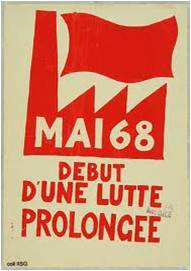


Barthes, of course, announces no ‘death of the author.’ Obviously J. K. Rowling, Dan Brown, Patricia Grace et al are all very much alive, however much or little of their ‘strong personality’ we may feel from time to time. Barthes’ piece, far from being an ‘announcement’ of the kind Stead doesn’t even deign to read, is a polemic, a political-aesthetic intervention, and an argument – amidst the rebellion and chaos of 1968 – against the author function in favour of the reader and reading. What has author-centred criticism produced?

For Barthes,

Classic criticism has never paid any attention to the reader; for it, the writer is the only person in literature. We are now beginning to let ourselves be fooled no longer by the arrogant antiphrastical recriminations of good society in favour of the very thing it sets aside, ignores, smothers, or destroys; we know that to give writing its future, it is necessary to overthrow the myth: the birth of the reader must be at the cost of the death of the Author.

How true this is for the era of the book club, the literary festival and enforced celebrity! Book reviewing and discussion is forced from the pages of newspapers while writers are coerced into ever-more restrictive routines of appearances, interviews and promotions. ‘Good society’ sets up the writer as a model for the ‘knowledge economy’ while at the same time disdaining writing, ambiguity, excess, interpretation. Kerry Prendergast, the (thankfully ex-) Mayor of Wellington used to talk about ‘creative people’, as if the arts were a realm apart from the proles serving lattes. Barthes’ polemic is, before everything else, an instance of democratic radicalism, insisting on the productive role of the reader.

A democratic role. Most frightening, in all this, for ‘traditional’ criticism, is the suggestion that study may be forced to encounter the object itself – language in all its slipperiness and ambiguity – instead of the closed meanings of authorial interpretation:

“Once the Author is removed, the claim to decipher a text becomes quite futile. To give a text an Author is to impose a limit on that text, to furnish it with a final signified, to close the writing. Such a conception suits criticism very well, the latter then allotting itself the important task of discovering the Author (or its hypostases: society, history, psyche, liberty) beneath the work: when the Author has been found, the text is "explained" - victory to the critic.”

This rhetoric is unthinkable without its context in 1968 – Barthes’ call (‘the birth of the reader must be at the cost of the death of the Author’) is a slogan alongside ‘be realistic, demand the impossible’ aiming itself against the deadening authorities of a capitalist system demanding stable meanings, compliant reader-workers, and efficient, unambiguous transmission of signs. (A counter-argument from another era, that consumer society in fact relies on the flourishing of Barthesian reader-producers, seems to have fallen away during the War on Terror: you were either with ‘us’ or with the terrorists, and the stability of Author and Authority, to say nothing of the Bible and Christ himself, reasserted itself with a startling lack of ambiguity).  


Fit audience, though few: this is what Barthes sets his face against, as he assembles a programme for reading that will follow texts where they lead, bypassing the gate-keeping figures of Author and Critic. Bureaucrats, Brecht told Benjamin once, are afraid of production – they never know where it might lead. Texts have more meanings than any single reading – or any Proper Noun of author – can possibly contain. They’re generators of meaning, and they take part in an endless process of generation:

“We know now that a text is not a line of words releasing a single “theological” meaning (the “message” of the Author-God) but a multidimensional space in which a variety of writings, none of them original, blend and clash. The text is a tissue of quotations drawn from the innumerable centers of culture. [. . .T]he writer can only imitate a gesture that is always anterior, never original. His only power is to mix writings, to counter the ones with the others, in such a way as never to rest on any one of them. [. . .] Succeeding the Author, the scriptor no longer bears within him passions, humors, feelings, impressions, but rather this immense dictionary from which he draws a writing that can know no halt: life never does more than imitate the book, and the book itself is only a tissue of signs, an imitation that is lost, infinitely deferred.”

The idea that this attention to the ‘tissue of quotations’ that makes up a text involves any neglect of ‘close reading’ and the textual textures older critics (or their ‘post-theory’ epigones) claim to treasure is dishonest, and the shrill preaching from the Right that they are the defenders of Literature is baseless arrogation. What could be more breathtakingly precise examples of close reader than Barthes on Balzac, de Man on Wordsworth, Derrida on Montaigne? These are readings that extend writing, to be sure; that, I suspect, is the productivity that leads them to be so mistrustred.

What is the purpose of the humanities?


Alain Robbe-Grillet called Barthes “a thinker of slippage”, and this is his great beauty and his great weakness. “Death of the Author” lives on as a text in a context quite foreign to its production and initial reception. Activist, interventionist, militant, Barthes’ writing has, in the following decades, been banalised in departments of literature prepared to important exotic critical names without facing the bracing challenge of the texts and ideas. He’s a writer now more scoffed at than read and, in one sense, it is entirely understandable that this should be so – if 1968 was in turn defeated by the neoliberal reaction from the late 1970s on then the Death of the Author became impossible, a dream living a half-life in English Departments abroad.

But Barthes’ example and challenge remains. The humanities are, currently, everywhere under attack. Insisting that what we do matters without further justification seems unlikely to help in this situation: if the universities struggle to find allies as the enemies of the humanities subject them to the language of profit, business outcomes and ‘relevance’, we may be forced to look to our own practice for reasons to ask for allies’ assistance.

This is the moment when, for me, narratology and teaching matter. Too many people take Barthes to mean that, with the ‘death of the Author’, anything goes, and that detail and scrupulousness disappear. His essay suggests the opposite: dispensing with the ideological myths of the Author as comforter and limit forces us to pay attention to those much-vaunted ‘words on the page’ and their implications, as well as the wider world of signification in which they operate.

In teaching, for me, the promise of ‘Theory’ so-called is not its ability to bamboozle students (the complaint of the outraged defenders of the Common Reader) but rather its organising of materials so as to enable a common vocabulary for dispute. Mieke Bal outlines the problem in a comment that has always inspired and troubled me:

“Teaching literature essentially amounts to showing off, as it were, unintentionally intimidating students: the more they find interest in the interpretation offered, the more they feel personally incapable of doing something like it. Offering terms which allow them to couch their views in publicly accessible language was in my eyes an important gain to be drawn from such structuralist exercises.

But disillusion quickly followed. For the terms of structuralist jargon, if understandable at all, intimidated the students even more, and, interestingly, for the same reasons: because, ultimately, the were not intersubjective, could not be understood.”

The disillusion here, I think, comes from our political moment – the great breakthroughs in literary criticism have arrived, not via pedagogical reformation, but on the back of political transformation. The Formalists share 1917 with the Bolsheviks; Barthes can assume an audience in the student and unionist rebels and revolutionaries of the ‘night of the barricades’ and the convulsions of 1968. Perhaps the Arab Spring – and the end of postcolonialism – will produce new audiences, new theories, new narratologies? Without this spur it is no wonder that Barthes’ insights desiccated into stylistic tics and academic mannerisms. That, though, is no reason to dismiss him for these.


Roland Barthes is one of the best stylists I’ve read, an exhilarating, provocative inspiration of a writer. I felt an excitement reading him – and being taught him by people like Andy Barratt and Simon Ryan in Otago, and Linda Hardy at Victoria – that in turn prompted me to think about how close reading, textual analysis, and social critique might profitably ‘blend and clash.’

A ‘post-Theory’ Humanities is no Humanities at all, and one that – if it is nothing more than the well paid studying without thought to the object of study or the audience for their research – scarcely deserves defending. The birth of the reader, again, can commence only with the rebirth of the ‘Death of the Author.’

Sources

CK Stead, “English in our Universities” The Writer at Work (Otago University Press, 2000), p. 117. Alain Robbe-Grillet’s line is from his Why I Love Barthes, trans. Andrew Brown (Polity, 2011).

Many thanks to Pip Adam, who was a silent but important and supportive presence through my teaching this semester. The students protesting in solidarity with their Auckland brothers and sisters offer another model too.

Tuesday, 8 May 2012

And who are the Chinese?


A few weeks ago, the Dominion Post ran as its feature letter to the editor a piece arguing that Anders Behring Breivik was right in theory, but wrong in practice.  (A banal but still important aside: imagine the obloquy facing anyone with an Arabic name writing in to make a similar claim about Bin Laden!) All of this as Breivik’s trial continues, and as we re-learn details of how he murdered scores of young social democrats and citizens. The usual, polite correspondence ensued; such views are part of the editorial sense of the acceptable, evidently, as is Chris Slater of Silverstream’s contribution. Writing on how Islam is “a supremacist and intolerant religion with increasingly conservative followers”, Slater proceeds, as if quoting a local columnist or a slightly eccentric public intellectual: “As Anders Breivik points out, multiculturalism is part of a deliberate…” 

This is all contemptible and morally distasteful, obviously: it’s also politically revealing. The Dominion Post’s earlier, eager persecution of local ‘terror’ means I wasn’t surprised of its coyness in the face of genuine, self-described terrorism of the fascist variety, and this reminds us that not all treatment of terror threats are equal. Besides, as Tad Tietze and Elizabeth Humphrys have argued in a series of very important posts, media treatment of Breivik’s trial involves a dangerous interaction of de-politicisation and political expansion. De-politicisation, as speculation on Breivik’s mental state distracts attention from the detailed, programmatic basis on which his terrorist attacks were carried out. Political expansion, as this very programme finds its echoes all across the mainstream media: Breivik’s hateful rantings, like so much produced by European fascism currently, are echoes and repetitions from the much more respectable, and more widely syndicated, discourse of Islamophobia and war-on-terror chest-puffing that passes for serious thought on the constitutional Right. (Australia’s own intellectual embarrassment, Keith Windschuttle, was one of the many publicly-feted cranks and official racists Breivik drew on).

Understanding – and confronting – fascism is an urgent question for the left, in Europe and elsewhere. Utoya’s tragedy is also a warning.


The Shadow

A series of events these last months have had me reflecting on a local shadow of the Breivik trial, one which doesn’t match the current atrocity in the scale of loss and suffering, but which contains all too many parallels with the current scene of semi-apology, depoliticisation, and race hatred.


On 24th September 1905 Lionel Terry shot Joe Kum Yung in Wellington. Full of the racial theories and eugenic obsessions that characterised conservative thinking of his time (and, shamefully, that infected and paralysed much of the Australasian Left), Terry intended his murder as a political act, to rouse the colony against the threat of the ‘Yellow Peril’ and Chinese influence. He had travelled to Wellington distributing copies of his The Shadow, full of anti-Chinese poems and ravings. He turned himself in after the killing, and used his trial as a platform for racism.

As with Breivik, much of Terry’s case centred around his mental state. His later life, at Seacliff and elsewhere, make it clear that he was clearly a very disturbed figure, but, despite the prominence given to it in most historical accounts, the details of this particular petty individual’s life are less important than the context of his crime. He found huge public support, and it’s impossible to imagine this purportedly humanitarian concern being mobilised were it not connected to deeper sympathies with his anti-Chinese message. Clemency was granted, and the death penalty initially set transformed into a sentence. Petitions were gathered. Prominent figures spoke out.

A policeman who had travelled some of the way to Wellington with Terry described him in ecstatic terms:  'He looked a perfect picture. As fine a man as ever I saw – bolt upright, and with as free an action as you'd see on an athlete.' Some years later, once Terry was at Truby King’s asylum at Seacliff, locals wrote to the Otago Daily Times in support of his escapades: one correspondent wrote in 1907 that Terry would be “an honoured guest at 95 percent of the homesteads of Central Otago. Had his capture depended on the residents of Central Otago he would never have returned to Seacliff.” Truby King, himself a bigoted eugenicist well in sympathy with anti-Asian political programmes and fantasies at the time, developed a long-term friendship with Terry.

Madness is hardly the question here – why did it manifest itself as a murderous obsession with the Chinese? The answer to this can be provided by a glance through any of the mainstream publications of his time. Ettie Rout, now remembered for her work around birth control, wrote in her Maori Mythology of the “truly fearful prospect” that the “Yellow race” would overwhelm the white.  (This is much the same line used by European fascism around the threats posed by multiculturalism, although given contemporary ‘culturalist’ twists). Dr Doris Gordon, founder of the NZ Obstetrical Society, met Terry at Seacliff and recorded these impressions: “'A man of wonderful physique and a brilliant brain. Terry would propound his brilliant hypotheses; by the time he finished most of the hypnotised students were wondering who should be labelled lunatic and who custodian!'”

Terry drew then, and developed, an existing discourse of hatred pre-prepared for him. The parallels aren’t exact, of course; there was no fascist movement in 1905 for which this murder could act as an organising issue; the ‘cultural’ politics of our day (Breivik’s hated cultural Marxism) have replaced the pseudo-sciences of an earlier era.

In memory of Joe Kum Yung

Joe Kum Yung has, for the most part, slipped from the focus of narratives of the 1905 attack, and it’s easy to see why. He was a normal man, elderly, incidental, until his death, to the story, chosen for his skin colour and the ease with which he could be murdered.

The poet Alison Wong, in her extraordinary and beautiful debut novel As the Earth Turns Silver, rescues Joe Kum Yung from posterity’s condescension, and grants him posthumous dignity:

Joe Kum-yung was not a clansman, but with maybe three hundred in all of Wellington, every Chinese was a brother, especially one shot at point-blank range. Yung heard from Fong-man, who heard from Joe Toy, that Kum-yung had been walking home when a man came up behind him and shot him twice in the head. No one got a good look at the murderer. It was a Sunday evening. It was dark. Haining Street was almost deserted. The man with the revolver wore a long grey coat. He was tall. He was gweilo. When Joe Toy got there, his cousin was lying outside Number 13 in a dark pool of blood, a paper bag of peanuts scattered around him.

Wong’s novel, a detailed and passionate work of historical reconstruction, restores some attention to the Chinese voices in this period of sustained hostility and European ill-will.


And who are the Chinese?

This isn’t history, though, or not here. For months now television and radio has been interspersed with announcements for shows analysing the dangers of more land passing to ‘the Chinese.’ The Yellow Peril may as well never have left, and neither, shamefully again, has sections of the left’s complicity with it. Loudest in their condemnation of foreign ownership have been Labour and the Greens.

And who are the Chinese, the threat to those national treasures the Crafar Farms? If we’re to enter stakes in any tauiwi entitlement register, my own memories are of Cantonese-speaking Chinese families I met at my Dunedin primary school, many of whom had family connections in the region dating back to the Gold Rush. A longer period of settlement, to be sure, than that of my own family’s post-war arrivals, and yet this is unlikely to prevent the verbal abuse and physical threats that follow along from talk of ‘foreigners.’

Political issues are in play too. I’ve written elsewhere on the Crafar farm sale, and have, in the organisation I’m a part of, tried to hold to something like a line involving socialist internationalism.


In the cultural sphere, though, and amongst those who wish to see themselves as liberal or progressive, we’re rotten with a xenophobia so strong it no longer needs to recognise itself. You can buy hoodies with the slogan “Born Here” marked on them, a phrase I hadn’t seen since the white race riots and attacks on Lebanese people in Sydney in 2005. For New Zealand, though, the message is so universal to seem like it’s lost any self-consciousness of its political purpose and exclusionary effect.

Neo-nazis marched, quite without opposition, through Christchurch not long ago. Violent attacks against Asians are reported around the country. Slogans around ‘foreign ownership’ become a common leftist currency, and smuggle in with them more direct, forthright racisms. (One placard from last week’s hikoi against asset sales in Wellington involved nothing more than a Chinese flag with a black cross through it).

Amongst all this, the Terry trial comes through to me like a moment of the pre-history of this present.  Intellectual climates are built through asides, gestures, hints, implications – the pitch around Islamohophobia was built over many years, and we see its results.

Anti-Asian racism is, in a settler colony like this one, part of the obsessively re-worked anti-myths of the Pakeha world, the fears of invasion nourished by generations of invaders. They’re being revived, consciously, and dangerously, all around us.

In March David Shearer made this comment on TVNZ’s Q&A:

Yeah, but what I’m doing here is saying we’re not closing the door to all foreign investment. I mean, it’s very clear in the bill that I’m putting forward. What we’re saying is that our land, our valuable land is best farmed for New Zealanders and the value flows back to New Zealand as well. What we don’t want to see is foreign corporates coming in here, buying up lots of land, and the value and the benefits flowing out of New Zealand, and that’s very very important.


Who are these New Zealanders? Who are these foreigners? What does it mean to say valuable land is ‘best farmed for New Zealanders’? (With hundreds locked out from a major chain of meatworks, that last question arrives with a hollow kind of mirth).


Alison Wong carries out a piece of cultural redemption and memory, and asks her readers to see the world as Joe Kum Yung. Narrative and imagination here offer political possibilities. Too many of the current political voices – official ‘left’ as much as governmental right – offer the far-too-familiar filter of all of our numerous Lionel Terrys.


 Sources

Dr Gordon’s quote I’ve taken from Hilary Stace’s very helpful article on eugenics in New Zealand. Philip Ferguson’s PhD thesis on the White New Zealand policy – available as a PDF here – is the best piece I’ve read on the politics of exclusion. 

Sunday, 25 March 2012

Against Privilege Theory


This recent intervention from U.S. socialists in the Occupy movement has set me reflecting on the term ‘privilege’, and its growth as a analytical tool – and accompanying rhetorical strategy – in social movements.


I’ve little patience with contemporary leftist critiques of so-called identity politics, whatever previous value that struggle may once have had. They seem now, for the most part, to be dedicated to trying to get other people to quieten down about their identity, all in the name of a (largely mythical) ‘central’ class concern. This isn’t just bad politics. It’s also bad class politics. A left which isn’t – like the working class itself – attuned to, and welcoming of, the varieties of human sexuality and gender identity, and actively anti-racist, is hardly worth the name or the bother. And, besides, it’s not like the oppressed choose what questions of identity they’ll be confronted with. The trans person who has no appropriate box to tick when they're asked about sex on census day, or who is assigned a prison cell in a jail for people other than the gender they identify with, didn’t ask to be placed in that situation.


Conversations about, and struggles over, identity, are essential to politics. Gary Younge is wise about this, as so much else, and stresses, in his Who Are We?, that “identities are a great place to start.” The pains they impose upon us (in the case of compulsory heterosexuality, say) or the sense of liberation they can bring (as with the superb slogan Black is Beautiful from the 1960s) can both spur further action, and demand reflection. That process, for those not amongst the oppressed group, isn’t always comfortable, but it’s an essential starting move. That confrontation – in which a sincere belief in one’s involvement in a particular cause comes up against the realities of implication in a wider ideological system – seems to be the moment from which privilege theory takes its energy. The exciting work of Eclipse Rising, the Zainichi activists on the West Coast of the United States, or the publishing collective Mellow Yellow in this country, are just two examples of the kind of direction that struggle can take.


It’s here that my discomfort sets in. For starters, the language here – whatever gestures are made in the direction of wider structures of power – relentlessly psychologizes what needs to be understood in systemic terms. That oppression exists is so obvious that it shouldn’t need mentioning, nor should it be put into rhetorical competition with other injustices. (Here I agree with Richard Seymour at Lenin’s Tomb: “those who attack multiculturalism in the name of class instantly forfeit their probity on both subjects.”) Contemporary capitalism is riven with barbarousness, racist inequalities, murderous injustice, sexist bigotry and petty, vindictive meanness.


But to whom does any of this accrue ‘privilege’? The language of rights we’ve inherited from the great bourgeois revolutions, whatever its other problems, still seems preferable at the level of immediate slogans and rhetorical demands: to walk the streets unmolested ought to be a simple – and essential - democratic right, not a privilege granted, like access to a licensed premises, to the lucky by the powerful.


More worrying, talk of privilege in this sense suggests an investment in, and a benefit from, the existing state of affairs for those not in oppressed groups (I mean, for most of these examples, straight-identifying white male workers) that I don’t think the history of previous liberation movements bears out.


The Gay Liberation Movement of the 1970s, for instance, has been of enormous benefit to straight men. This wasn’t, quite properly, the aim of that movement, but its by-products have been a boon for us all. A more open culture around sexual experience and sexual expression; programmes for male health unthinkable before the activism and stridency of the gay rights’ movement; a greater sense of the complexities of identity and desire: all this has resulted in markedly better lives for heterosexual men. It took Women’s Liberation and Gay Liberation to attack and critique the association of male sexuality with dominance and aggression- are straight men worse off for this? On a more practical, and needlessly tragic, level, homophobic anxieties around examining parts of the body play an important part in keeping deaths from prostate cancer so high, while the quite different attitudes to contraception between openly gay men and heterosexual-identifying men who have sex with other men point to the universal potential good of Gay Liberation.


Check Your Privilege


Talk of checking privilege captures little of this complexity, whatever the individual merits of the suggestions involved, and, what’s worse, produces a sense of the experience of liberation as one of threat, loss, and morally-driven reformation. Its language here, ironically, mirrors that of the mainstream, in which feminism has ‘emasculated’ men, produced a crisis of masculinity and so on. Challenges to oppression involve all sorts of uncomfortable and difficult confrontations, to be sure. Whether these are what drive that process is another matter.


Intersectionality is the term some types of feminism use to grasp some of this, but the spatial imagery this deploys – in which privileges pile up on one another like the layers of a pancake brunch – doesn’t seem to fit the dynamics of liberation movements past. (I’m writing about past struggles because, like the rest of my generation, my political formation was in the backlash and devastation of these movements).


Autralia’s Builders’ Labourers Federation in the 1970s seems, at first glance, like a picture of privilege: overwhelmingly male, part of a boisterously heterosexist culture, from a ‘traditional’ blue-collar industry. The BLF’s response as political radicals turned it into a fighting union, though, points in a different direction. For starters, the BLF built amongst immigrants and non-Anglo groups, recognizing the need to draw new migrants into union struggles.


More strikingly, from the height of their industrial power in the 1970s, the BLF took part in an outstanding campaign in support of gay and lesbian rights. They imposed a “black ban” on work at Macquarie University when it tried to kick out a gay student from his hall of residence. (Savour the contemporary headlines here). Strike action forced the reinstatement of a student to teachers’ training who had been expelled for writing a lesbian poem. For organized workers, power doesn’t corrupt, it inspires. (Traditions from the BLF live on: in 2005 a  gay comrade and friend of mine threatened with arrest at Deakin University managed to keep up political activity when construction workers on site stopped work to defend his freedomof speech).


The BLF matters as an example because it disproves both the mythology of the right-wing anti-identity politics stance at the same time as it shows how union organization against oppression might operate. This was a group of ‘traditional’ workers for whom social questions and ‘labour’ questions were inseparable, and their industrial and political strength rose and fell as they fought on both fronts.


None of this should suggest an illusory picture of the trade union movement as free of prejudice, of course. But the strategic dilemmas we face demand an older language of ideology and false consciousness, whatever the difficulties in that term, instead of hierarchies of privilege.  The problem here is strategic stupidity, not privilege. Japan’s major unions have been happy to rest on their privileged position as organisers of the permanent and full-time for many years now. The crisis gathers, though, as casualised and impermanent younger workers have been kept from the movement. That problem, if not addressed with solidarity and organization, will break the permanent workers’ groupings, not maintain them.


Again, who can speak as Other?


One of the productive irritants of privilege theory, though, leftist practice has no right to ignore: where are the voices of the oppressed? A contemporary socialism which isn’t spoken through the language and ideas of women as well as men, queers as well as straights, migrants as well as ‘local’ workers, is of no interest to me. Insisting on agency  is vital here, and warns against revivals of the White Man’s Burden elsewhere; it also reminds us of what’s missing in so much public life.


The question, for me, isn’t one so much of appropriation as appropriation for what end? I’m involved in the movement for abortion rights, for instance; it seems clear that this movement needs both to be led by women and to have the active involvement of men. There’s no contradiction there, and the choice isn’t between marginalizing others and choosing to keep silence in the face of what’s framed as privilege. There are relationships between leadership, involvement, active listening and respectful debate that need explored: privilege theory threatens to close those off instead of developing them.


This blog itself, I’m aware, exists just that side of Orientalism, and leaves me open to not-wholly-unjustified charges of appropriation. I started writing here to try and get into critical habits that might undo three divisions that seemed to be conceptually crippling, and politically harmful: that between the still-dominant Anglocentric orientation of my disciplinary location and the multiculture it inhabits; that between ‘theoretical’ work hidden behind paywalls and peer review and the direct, conversational address of blogging; and that between my training and institutional work as a literary critic and my political commitments and activity.


The risk of appropriation remains, naturally: these aren’t my stories, I’m not of this community, I’m not walking this path. The challenge of literature, and the value of literary studies, is that it offers an imaginative space in which to try and inhabit identities that aren’t our own, and situations we’re not able to share. That work can be productive when its memory plays out in more practical political situations.


Literary experience stresses peculiarity here, the complexity of subjectivity and individual involvement in larger history. The ending to Jean Rhys’ “Let Them Call it Jazz” sticks in my mind as the best example of this:


I read the letter and I could cry. For after all, that song was all I had. I don’t belong nowhere really, and I haven’t money to buy my way to belonging. I don’t want to either.


But when that girl sing, she sing to me and she sing for me. I was there because I was meant to be there. It was meant I should hear it – this I know.


Now I’ve let them play it wrong, and it will go from me like all the other songs – like everything. Nothing left for me at all.


But then I tell myself all this is foolishness. Even if they played it on trumpets, even if they played it just right, like I wanted – no walls would fall so soon. ‘Let them call it jazz’ I think, and let them play it wrong. That won’t make no difference to the song I heard.


I buy myself a dusty pink dress with the money.


The other possibility this raises, with its line about the song being sung for the narrator, is that of standpoint theory, the sense, following Lukacs, that in fact there’s a privilege or the chance to epistemological and political insight to particular marginalized positions, the chance from some locations better to see the system whole.


Where to go from there is a whole other discussion, and one I can’t pursue here. The second half of Gary Younge’s quotation suggests one direction:


even before the recession, for a younger generation capitalism had already become a system worth critiquing. People have never been so savvy about neoliberalism and the need for transformative politics.


So on the one hand we have never been so aware of international capitalism, but we've never been less well organised as a force - we are too dispersed. 

And that's the challenge we face. Identities are a great place to start - they're about how we got here, what makes people want to be part of a certain politics. But it's a terrible place to finish. If you end with identity, you end in fundamentalism or self-indulgence.


So our task is to find a way to mobilise identity for good. Identity is like fire. We wouldn't want to do without fire, but it can be dangerous. To deny difference doesn't mean that difference doesn't exist. It just means that you can't see it.


James Baldwin expressed this in a different way in a line I’ve always loved. Asked if he thought being poor, black and gay had disadvantaged him as a writer, Baldwin replied, no, he felt he’d hit the jackpot. It’s another privilege again.


Sources

My knowledge of the BLF campaigns within the social movements comes from Liz Ross, Dare to Struggle, Dare to Win (Vulgar Press, 2004), and Meredith and Verity Burgmann, Green Bans, Red Union (UNSW Press, 1998). Both are wonderful histories.


Tuesday, 6 March 2012

Counter-song to 'The Friendliness of the World'


Where is the literature of work? There are all sorts of theoretical issues and problems clustered around this question, to be sure, and labour’s harder, possibly, to draw out in narrative form in an era when – as Jameson has it - “representation is not conceived as a dilemma but as an impossibility”, but, all the same, the fact the question is asked so infrequently ought to give us pause.


There’s something grotesque in the claim that literature about work is boring, too. It’s one of those claims that seems, usefully, to be an aestheticism and willing impractical; I’m starting to suspect, though, that it involves a more knowing complacency, and comfort with the existing order, than usually needs acknowledged. A future historian could read many volumes of contemporary literature without realizing that there had never been a bosses’ offensive through the 1980s and 1990s.

What is the alternative? Part of my day job involves trying to keep up to date with contemporary literature, and so I can say this with confidence: there are few things more boring than ‘literary’ novels about middle-class people getting divorced, or having affairs, or experiencing revelations whilst travelling.  And yet these trash works, readers – the sub-genre Iain Banks calls the ‘Hamstead novel’ – are the works that manage to intimidate and brow-beat many any un-‘literary’ reader, and to dominate much of the reviews pages of the ‘quality’ press.


Perhaps the representational problems of contemporary capitalism aren’t all so very different from its earlier forms, and what we’re facing is instead a problem of strategy and outlook amongst writers. The details emerging in the last months about conditions onboard fishing ships in the Southern Ocean cry out for a Shelley or a Marge Piercy to record the disgust and indignation we all should be feeling. Workers have been kept in virtual slavery, subjected to violence, abuse, and sexual assault. They’ve had their wages denied, and have been sent into dangerous seas in what look (from reports and from my memory of seeing these ships in Dunedin) like rusted and decrepit wrecks. The entire situation is a scandal.

The desperation and horrors the international crews of these ships – the Oyang 77 and all the rest – face remind us too, though, of how a literature of work – by which I might as well make clear I also mean a means of communication for workers – may be reforged. It’s no accident that watersiders’ and seamens’ unions have been historical sources of militancy, clarity and courage: if the ruthlessness of shipping company bosses forced conditions in the industry to ghastly lows, long periods and sea together – and the spread of ideas, publications, and magazines from country to country – produced intense cultures of solidarity and class consciousness. Ships were, for many generations, the universities of the working-class movements.

*

In 2008 the Japanese book world was surprised by the sudden revival of a long-lost classic. Kobayashi Takiji’s Kani Kosen (The Crab Cannery Boat), first published in 1929, sold around 380 000 copies in the first part of 2008; its publishers would usually be happy with a run of 5 000 or so. A manga version came out that same year, and a film adaptation followed. Kobayashi’s novel – the story of deprivation, abuse and, eventually, resistance, on a fishing boat – has, for most of its life, been read as a piece of literary history, a classic of leftist ‘proletarian’ literature. Kobayashi’s new readers, though, were Japan’s ‘new poor’, casualised, underemployed and precarious workers in their 20s and 30s for whom the novel’s representations of workplace humiliation, sexual harassment and assault, isolation and drudgery had immediate, and contemporary, relevance.


Kobayashi’s surprise revival wasn’t altogether surprising; as Norma Field has pointed out, a number of figures in publishing and Kobayashi scholarship had been working for many years to make his rediscovery possible. But his new audience – and the new readings of his work they enable – is exciting nonetheless: the latest Kobayashi ‘wave’ has produced, as well as manga and film adaptations, a play and other creative interpretations.

Kani Kosen’s twenty-first century life demonstrates, for me at least, that the audience for literature about work is undiminished. The decline of interest in workers’ literature and literature of work (not always the same thing, to be sure) is more to do with the political struggle within literary criticism than it is to do with any real changes in society or the social struggle. Being a socialist working in literary studies has been, for many years, a lonely job of work; I’ve a feeling from the ‘year of the protestor’ last year that it may become less so soon.


Reading accounts from the Oyang 77 and others, it was Kobayashi’s work that came into my mind. His realism was dedicated to documenting these outrages, and his account of life on a fishing ship gives me more of a sense of this experience than anything I’ve read since.

Kobayashi’s is an openly propagandistic work. He aims to expose the conditions in the shipping industry, and is quite obviously moved to write by a righteous anger. Literature, motivated by this anger, isn’t solely a tool for organizing, but it has its role to play:

"Capitalism, intending that labour remain unorganized, has ironically created a situation where it has caused it (almost spontaneously) to organise. I have attempted in this work to show how inexorably capitalism infiltrates the new territories and colonies to carry out a primitive exploitation and, with the backing of the powers that be and the armed forces as guards, watchmen and bullies, carries out a never-ending series of brutalities."


What then of Kani Kosen’s literary qualities? The mainstream of criticism follows much the same predictable path here as it has elsewhere: Kobayashi’s isn’t a Hampstead novel. Roy Starrs in Modernism and Japanese Culture remarks rather sniffily on the “pedestrian quality” of most proletarian literature, but this is to miss the point of Kobayashi’s formal radicalism and aesthetic aims. Kani Kosen is written in a ‘flat’, broken, ‘objective’ style, recording – like Isherwood’s line ‘I am a camera’ – as if without narrator or narrative presence, drawing the reader into the thisness of that particular social situation.


The horrors this book records are horrific precisely because they’re normal, everyday events. A violent beating onboard; rape as a sanctioned form of punishment; dirt; poverty; danger: the crisis, Kani Kosen’s organization implies, is precisely that none of this is taken as evidence of a crisis.

Does ‘poetry make nothing happen’? The authorities in the early years of the Showa Era didn’t think so. Kobayashi was arrested repeatedly, held for his involvement with the Communist Party and the Proletarian Writers’ Guild of Japan and, on 20th February 1933, he died as a result of torture and beatings he’d received in police custody. Having lost his job over his publications – “The Absentee Landlord” is a classic alongside Kani Kosen – he was eventually to lose his life. He was the same age I am now when he died.


There have in fact been two Kani Kosen revivals. A 1953 film version linked the narrative to the post-war revival of union militancy in Japan, and matched by repression from the US occupying forces and newly reorganized Japanese capitalist class. This latest revival catches Japanese capitalism at a different stage in its history, and draws – inevitably, given the decomposition of the union movement and the loss of traditions of revolt – more on the details of suffering and victimization than the last time around. This new Kobayashi may further inspire anger, though, and, with it, action.

*

One last detail to link Kani Kosen and our current situation imaginatively. Much has been made of the nationality of the sailors on board the Korean-owned ships, and of the divisions between the foreign-owned vessels, the waters they work in, and the homelands of the crew.


It’s obvious there are tactics to divide and rule at work and that, at times, these have been successful. But this bosses’ strategy is a high-risk one, too; creating an internationalized workforce, they may find themselves with a newly organized, and unanticipated, opposition.

Kobayashi wrote Kani Kosen for internationalist purposes. He wrote in Japanese and for a Japanese market, but he never saw himself as a ‘Japanese’ writer – the label ‘proletarian literature’ is as much a utopian point of identification as it is a sociological-literary sign. Writing against racist and colonialist pieces on Korea and Koreas, Kobayashi insisted:

"The proletariat cries out that they are utterly opposed to imperialist wars, but I wonder how many workers in Japan really understand why they must protest. Nevertheless, they must be made to understand. This is a matter of utmost urgency."

This legacy revives, too. Norma Field reports that Kobayashi’s recent Korean translator and publisher - Yi Kwi-wðn and publisher Yi Sang-kyðng – travelled to speak at his birthplace in Akita in 2008. A more recent translation has appeared in Korean. On these affinities, Field observes:

Yi KwÄ«-wðn recounted how, as he translated the works of Marx or Lenin from Japanese translations in the course of underground activities in Pusan, he began to yearn for works of literature.  Encountering Takiji's works for the first time, and feeling a strong affinity for the portrayal of state violence (in "March 15, 1928") and underground struggle ("The Life of a Party Member") as well as the narrative of theCannery Ship, he translated the three, and his friend published them under the title of The Cannery Ship as soon as the Chun Doo-hwan regime came to an end.

Why did Yi Kwi-wðn feel the need for works of literature? Why, for that matter, did Takiji and his comrades feel the need to produce literature during their busy, danger-ridden pursuit of social transformation? And how important is the fact of its being a work of literature to the revival of the Cannery Ship?  We know that the title has provided an invaluable metaphor enabling people to grasp their current condition, but what about the work as a whole?

It remains to be seen if, and how, in these strange and familiar times, the experience of novelistic ways of seeing, feeling, and thinking will serve people seeking to redefine their world: from a collection of atomized consumers to a collectivity of citizens who, by forging solidarity around the necessity of work, have once gain begun to dream of a society dedicated to the flourishing of all.

The literature of work never disappeared, and it was never forgotten. We’ve faced, rather, modes of reading – and practices of criticism – that have operated as a kind of anti-memory, erasing these dissident, radical, internationalist traditions of proletarian literature.


The news from the Southern Ocean convinces me, though, that this is a tradition ready to be revived.

Sources

Norma Field’s essay in Japan Focus is excellent. Read it here, if you missed the links above. Thanks to Shomi Yoon, who first introduced me to Kobayashi, and who wrote on him here. Neojaponisme have a very good introductory piece on Kani Kosen - and a translation of chapter one - here.

Roy Starrs’ quote I take from his Modernism and Japanese Culture (Palgrave 2011), an otherwise very valuable book.

I was prompted to write this in part from the work I’ve been doing to support the Maritime Union of NewZealand in their current struggle at Ports of Auckland. If you’re reading from New Zealand, look up Save Our Port.

ShareThis